
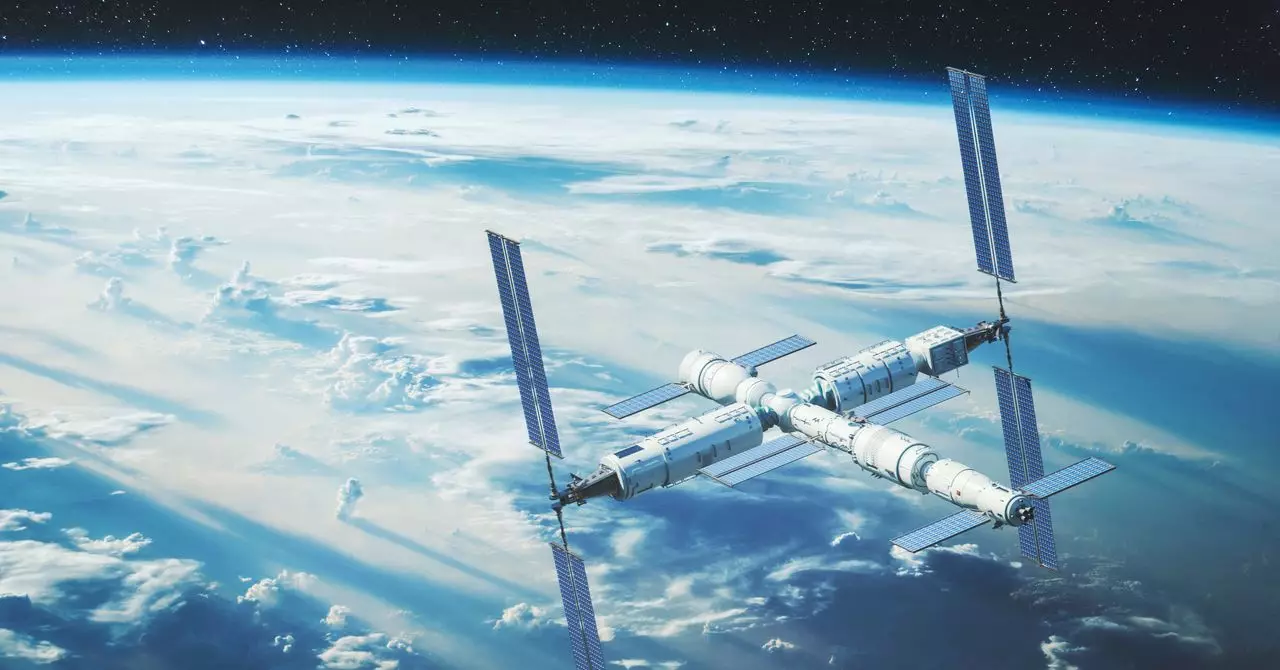
The introduction of Wukong AI marks a pivotal moment in China’s space exploration ambitions, showcasing a determined effort to integrate advanced artificial intelligence into human spaceflight. Unlike earlier space AI systems, Wukong is tailored specifically for the complexities of manned missions, emphasizing navigation, tactical planning, and psychological support. This strategic move not only enhances operational efficiency but also signals China’s intent to establish sovereignty over autonomous space systems. By deploying an AI modeled on a domestic open-source framework, China demonstrates its commitment to self-reliance, minimizing dependency on foreign technology—a crucial aspect amidst geopolitical tensions.
What distinguishes Wukong AI from predecessors like NASA’s CIMON or the robotic Astrobee is its dual-module architecture—balancing deep analytical capabilities on the ground with immediate, responsive support on the station. This bifurcated system allows real-time troubleshooting, situational awareness, and mission adaptability, especially vital during complex extravehicular activities. The AI’s focus on tactical planning underscores China’s acknowledgment that human space missions demand not only mechanical precision but also swift decision-making in unpredictable environments.
From Mythology to Innovation: The Symbolism Behind Wukong
Naming the AI after Sun Wukong, the legendary Monkey King, is more than a nod to Chinese mythology—it’s a deliberate branding that projects qualities like cunning, resilience, and limitless adaptability. This mythological figure embodies the spirit of Chinese ingenuity, resilience, and an unrelenting pursuit of knowledge—traits essential for pushing the boundaries of space exploration. Wukong’s role as a guide and protector in ancient tales aligns with the AI’s purpose: to serve as a guardian for crew safety, mission success, and rapid response when faced with unforeseen challenges.
This cultural connection not only fosters national pride but also positions Wukong AI as a symbol of Chinese technological ascendancy. It acts as a narrative tool to demonstrate that Chinese innovation is rooted in its rich history while simultaneously looking forward to future advancements. The choice of a mythological name reflects strategic branding aimed at inspiring confidence both domestically and internationally in China’s space capabilities.
The Implications of Autonomous AI in Space Operations
The deployment of Wukong AI raises profound questions about the future of human spaceflight. As autonomous systems become more sophisticated, the dependence on crew members for mundane or complex decision-making may diminish, allowing astronauts to focus on scientific research rather than operational minutiae. Yet, this also introduces concerns about over-reliance on AI, potential system failures, and the need for robust oversight.
Critically, Wukong’s integration signals a significant shift towards eco-systems in space where humans and intelligent machines collaborate seamlessly. It sets the stage for future missions where AI might perform complex navigation tasks, detect and diagnose system anomalies in real-time, or even perform autonomous repairs. However, the limited information about Wukong’s capabilities leaves room for skepticism—can an open-source model truly handle the unpredictable stimuli of space? The answer likely lies in continuous upgrades and extensive testing, but the risk of bugs or unforeseen failures remains.
This development symbolizes a larger trend—space is becoming an arena where AI is no longer just a tool but a strategic partner. For China, the move enhances national prestige and reasserts their technological independence. For NASA and other agencies, it serves as a challenging wake-up call: the future belongs to those who can integrate AI seamlessly into their space programs, transforming the possibility of autonomous, intelligent space missions into reality.
Expanding Horizons: Beyond the Tiangong Station
China’s ambitions extend well beyond the current scope of Tiangong. With Wukong AI now operational, the nation signals its intent to develop space infrastructure that is increasingly autonomous and resilient. The existing station serves as a testing ground, but the ultimate goal remains to establish a lunar base and facilitate Mars exploration. AI systems like Wukong will be indispensable in these endeavors, managing logistics, navigation, and real-time problem solving remotely.
In future, Wukong’s capabilities will evolve, potentially integrating with larger networks of artificial intelligences that coordinate between moon bases, Martian colonies, and Earth control centers. It could spearhead the transition from a purely human-led enterprise to one where machines take on more critical, autonomous roles. These advancements could redefine space exploration—shifting from reactive to proactive strategies, where AI predicts issues before they manifest, ensuring the safety of astronauts and the success of multi-year missions.
As China invests heavily in space innovation, Wukong AI exemplifies the blend of cultural symbolism and cutting-edge technology. It embodies China’s strategic aim to dominate the next era of exploration—not merely by launching rockets but by shaping intelligent systems capable of navigating the unknown with resilience, ingenuity, and purpose.
 English
  Spanish