
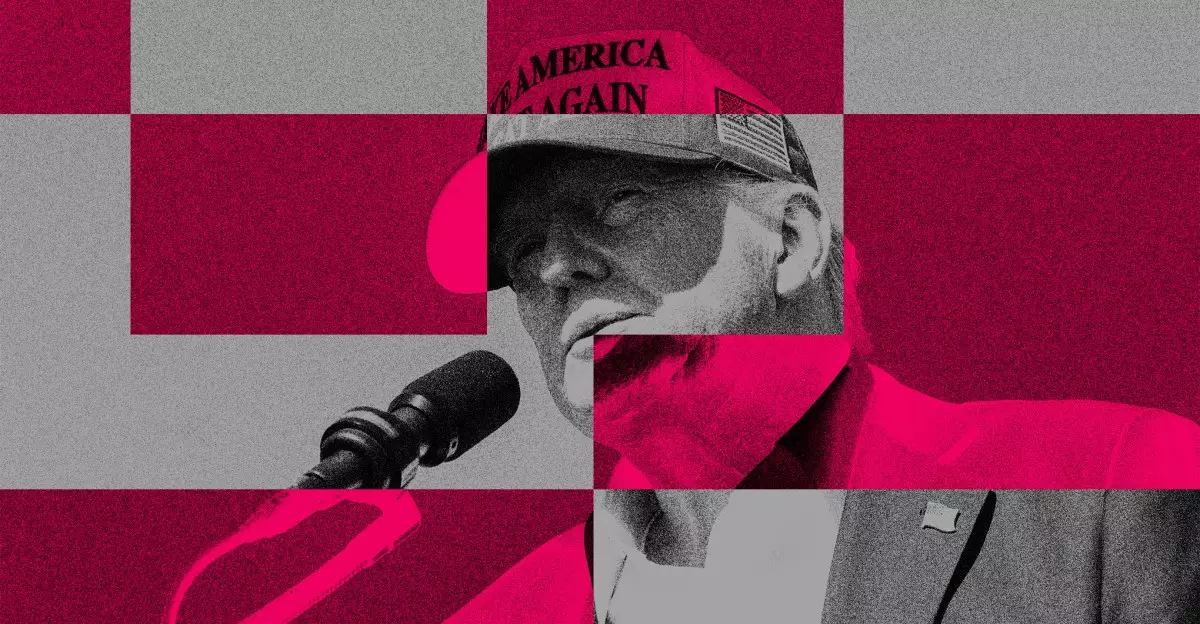
In a surprising twist, the Trump administration has ventured into the very territory it fought to restrict—a move that reveals more than just political posturing. Despite the lingering uncertainty surrounding the legal dissonance between the U.S. government and ByteDance, the parent company of TikTok, the administration has launched its own presence on the platform, marking what some might interpret as a calculated political gamble. This move isn’t about compliance or resolution; it is a demonstration of political instinct and savvy, even if it appears contradictory on the surface. The creation of an official White House TikTok account signifies a recognition of TikTok’s monumental influence in shaping public opinion and mobilizing supporters—a reach that even the most stringent bans cannot easily contain.
Why would an administration embroiled in a contentious battle with the platform step into its realm? The answer, at its core, lies in understanding TikTok’s unique position as an entertainment and political communication hub. Rights to access, audience engagement, and sheer visibility are invaluable tools for any political entity, especially one like Trump’s, which relies heavily on populist messaging and viral media tactics. This apparent contradiction—delving into a platform it once threatened to ban—suggests a pragmatic, if not strategic, shift, acknowledging that digital influence cannot be entirely suppressed through legislation or executive orders alone.
Legality, Politics, and the Illusion of Control
The legal landscape surrounding TikTok in the United States remains murky and aggressively contested. President Biden’s administration signed legislation aimed at compelling ByteDance to divest its holdings or face a ban, yet the implementation continues to be delayed—by design or by indecision remains a point of debate. Meanwhile, the Trump administration, despite having no current deal and posturing as a strong opponent of TikTok, has chosen to establish a presence on the platform. This raises questions about the underlying motives: Is this merely a strategic attempt to maintain influence while negotiations drag on, or is it a dismissive gesture, underscoring the administration’s uncertainty and lack of a coherent policy?
More intriguingly, this move exposes the administration’s perceived need to reach constituents directly in a space that they frequent. The administration’s account, which posted a video celebrating Trump’s accomplishments, isn’t just an empty gesture; it is a testament to the recognition that TikTok’s engagement metrics are powerful indicators of political influence. It also blurs the lines of legality and legitimacy—raising the possibility that the government might be willing to accept the platform’s influence as long as it can guide or shape the narrative, effectively diminishing the perceived threats around the ban.
The Power of Viral Politics
Perhaps the most telling aspect of the Trump administration’s interaction with TikTok is the campaign’s mastery of the platform’s viral potential. Unlike many traditional political campaigns, Trump’s team has harnessed TikTok’s entertainment-driven ecosystem more intelligently than their opponents. The official campaign account, @TeamTrump, has surpassed rivals in followers and views, proving that quick, attention-grabbing content can dominate digital landscapes quickly.
This mastery is no accident. It underscores a fundamental truth: in the age of social media, traditional notions of legality and legitimacy are often subverted by raw engagement and viral attention. The Trump campaign understands that TikTok isn’t solely a tool for entertainment but a battleground where political narratives are crafted, amplified, and sometimes even manufactured overnight. By maintaining a visible presence, Trump’s team ensures that his image remains relevant and continues to leverage the platform’s unparalleled reach.
Contradiction or Currency? The Real Digital Strategy
The administration’s choice to run a TikTok account despite unresolved legal and diplomatic issues speaks volumes about modern political strategy. It reflects an understanding that digital influence can be just as powerful as legislative action—if not more so. Launching an official White House account, particularly at a time of ongoing negotiations and legal battles, signals an acknowledgment that irrelevance in digital spaces equals political defeat.
Yet, the semantic paradox remains troubling. The United States government appears willing to flirt with the very platform it denounces, a move that complicates the narrative of technological sovereignty versus digital dominance. Politically, it’s a high-stakes game: maintaining influence, shaping public sentiment, and asserting dominance in the information domain, all while navigating a web of legal ambiguity and international diplomacy.
This approach isn’t just strategic; it is emblematic of a new era where control is less about legislation and more about cultural presence. The administration’s willingness to appear on TikTok—despite opposing policies—demonstrates that, in the digital age, influence isn’t solely wielded through bans and laws; it is also wielded through engagement, visibility, and the ability to shape conversations in the social media arena.
Ultimately, the Trump administration’s actions reveal a complex dance between opposition and utilization, where the line between control and collaboration blurs, exposing the evolving power dynamics of platform influence in modern politics.
 English
  Spanish