
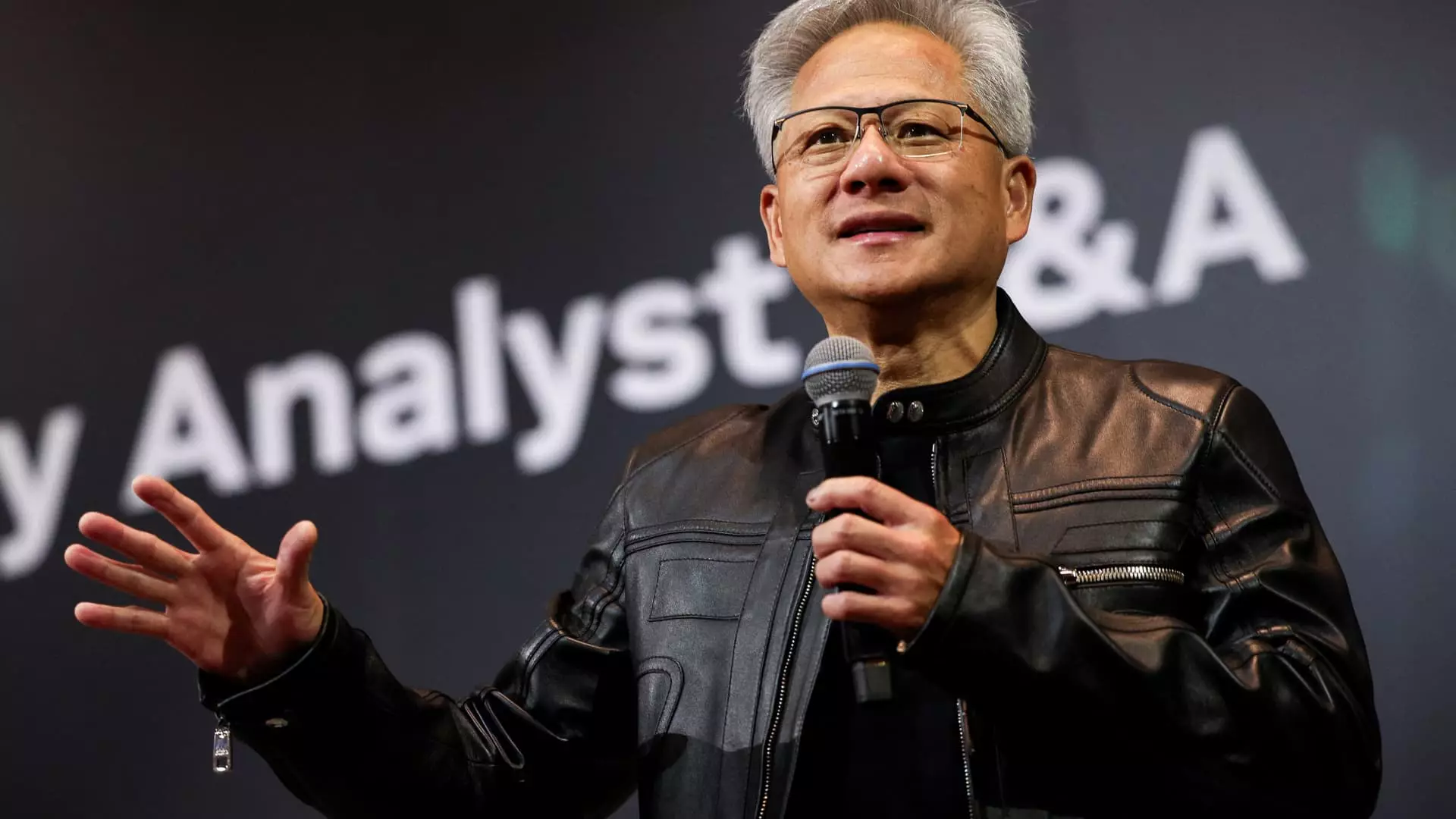
In recent discussions surrounding the semiconductor industry, one figure stands out as a beacon of strategic influence: Nvidia’s CEO Jensen Huang. His glowing praise for Taiwan Semiconductor Manufacturing Co. (TSMC) reveals more than just admiration; it signals a shifting landscape in global technology leadership. As Huang emphasizes TSMC’s exceptional role in advancing Nvidia’s next-generation AI chips, we see a microcosm of the complex geopolitical and market forces reshaping the semiconductor realm. The industry isn’t merely about manufacturing chips anymore; it embodies a contest of innovation, influence, and national interests. When a prominent American tech leader publicly lauds a Taiwanese corporation as one of history’s greatest, it underscores TSMC’s critical role as a linchpin in the global supply chain and a symbol of technological prowess.
What makes this admiration remarkable isn’t solely technological—though TSMC’s advanced fabrication capabilities are undeniably impressive—but also political. The United States’ recent push through the CHIPS Act aims to rebuild the country’s domestic semiconductor manufacturing capacity, reducing reliance on Asian giants like TSMC and Samsung. Yet, Huang’s comments highlight how the industry’s future may hinge on collaboration with, or dependence upon, Taiwanese manufacturing giants. It’s an implicit acknowledgment that technological sovereignty is intertwined with geopolitical stability, and TSMC’s consistent innovation keeps it at the center of this web.
Strategic Alliances and the New Power Dynamics
Huang’s public endorsement of TSMC’s stature aligns with broader U.S. policy goals, which seek to incentivize domestic chip production without alienating key international players. The Biden administration’s efforts to secure an equity stake in TSMC and other tech firms under the guise of the CHIPS Act reflect a nuanced balancing act. On one hand, the U.S. aims to foster strategic independence and safeguard military and economic interests; on the other, it recognizes the importance of maintaining relationships with vital Asian manufacturing allies.
TSMC’s multi-billion dollar investments in U.S. facilities, such as the Arizona plants, epitomize this dual approach—Americans want to keep critical manufacturing capabilities local, yet remain dependent on Taiwan’s leading-edge innovation. Huang’s remarks that anyone seeking to buy TSMC stock “is very smart” isn’t just flattery; it’s a recognition that investing in this Taiwanese powerhouse is tantamount to investing in the future of global technological dominance. That Huang is vocal in his praise also serves as a subtle form of influence, underscoring Taiwan’s indispensable role in the semiconductor ecosystem.
The industry’s consolidation and cooperation model are shifting toward a strategic ecosystem where innovation hubs, like TSMC, are central nodes. Meanwhile, the U.S. government’s discussions of acquiring stakes in companies like Intel or Micron signal an overture to diversify and strengthen the domestic landscape. However, the reality remains that TSMC’s advanced manufacturing processes—such as their development of cutting-edge chips like those used in AI and high-performance computing—are hard to replicate elsewhere. This dependency heightens the significance of Taiwan and TSMC’s pioneering work in shaping the industry’s future.
Intensifying Geopolitical Tensions and Industry Resilience
Amid all this, geopolitical tensions continue to cast shadows over the industry. Nvidia’s recent halt of some chip exports to China, due to security concerns surrounding their new H20 general processing units, exemplifies the fragile balance between technological advancement and geopolitical friction. China’s security freeze on certain chip imports, combined with U.S. restrictions, underscores the vulnerabilities inherent in a globally interconnected supply chain.
Huang’s comments addressing these issues reveal both optimism and caution. Nvidia’s hope to resolve concerns with Beijing and the company’s ongoing efforts to expand its presence in Taiwan reveal an industry navigating a treacherous landscape of national interests. Despite these concerns, Huang remains optimistic about Taiwan’s role, emphasizing the significant growth of Nvidia’s Taiwanese workforce and the company’s deep integration into local supply chains.
The industry’s resilience hinges on a delicate dance—leveraging Taiwan’s technological leadership, navigating U.S.-China tensions, and investing in domestic capacity. The recent surge in TSMC’s stock performance and Nvidia’s expansion plans attest to the confidence in this ecosystem. Still, the mounting geopolitical pressures threaten to destabilize this fragile equilibrium, forcing industry leaders to strike strategic alliances that transcend traditional market boundaries.
What Jensen Huang’s praise for TSMC reveals is an acknowledgment that the future of tech dominance isn’t just about innovation but also strategic positioning and geopolitical finesse. Industry champions like Nvidia are increasingly dependent on Taiwan’s cutting-edge manufacturing capabilities, and their public endorsements serve as signals to policymakers and markets alike. As the global landscape shifts, the semiconductor industry finds itself at the crossroads of innovation, geopolitics, and economic power, where alliances are forged not only through technology but through careful diplomacy and strategic investments. The era of unipolar dominance is giving way to a complex web of interdependence—one in which the chips are metaphorically and literally falling into new hands capable of shaping the next chapter of technological evolution.
 English
  Spanish