
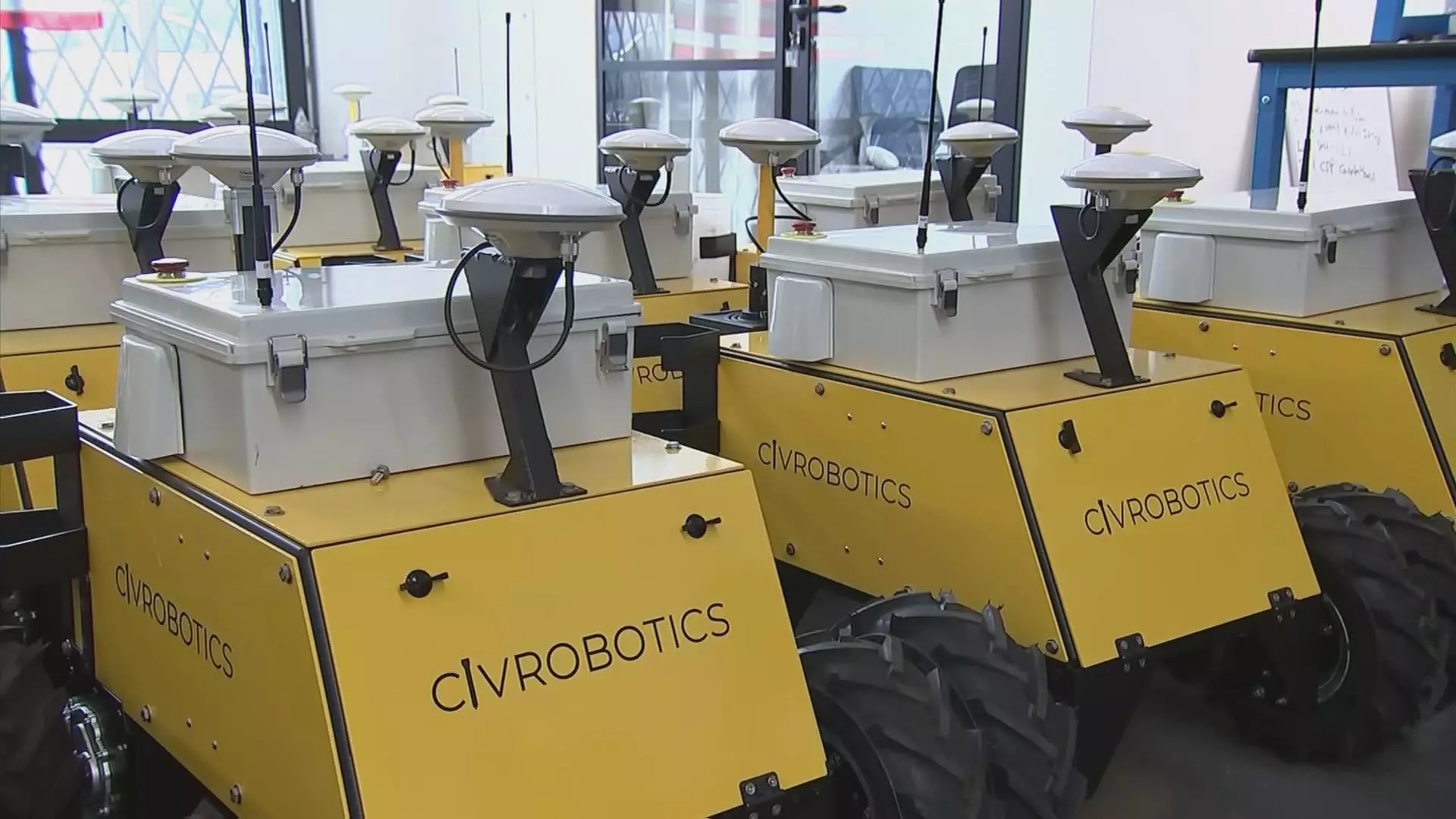
As the world accelerates its shift towards renewable energy, the challenges associated with building and expanding solar farms remain formidable. Traditional manual surveying methods, while effective, are time-consuming, labor-intensive, and often hampered by difficult terrains and unpredictable weather conditions. In response, innovative robotic solutions are emerging as game changers, transforming how renewable infrastructure is developed. The advent of autonomous surveying robots like CivDot signifies an evolution in construction technology—one that marries precision with efficiency and pushes the boundaries of what is possible in challenging environments.
Unlike conventional methods, these machines are capable of operating seamlessly across rugged landscapes, including deserts and muddy terrains, where manual surveying would require extensive manpower and time. CivDot, in particular, exemplifies this shift. Its ability to mark thousands of points daily with extraordinary accuracy reduces the logistical burdens typically associated with large-scale solar projects. This technological leap is not merely a matter of convenience; it fundamentally alters the economics of renewable energy development by drastically lowering labor costs and speeding up project timelines.
Strategic Advantages and Industry Impacts
The core strength of CivDot lies in its sophisticated navigation and geospatial capabilities. With a precision of less than a quarter inch, it can achieve detailed terrain mapping in environments that pose severe difficulties for human surveyors. This technology’s design accounts for real-world complexities, including uneven surfaces, dense vegetation, and adverse weather, which often derail traditional surveying efforts. By uploading data into the robot’s system, operators simply select the target zone, and CivDot handles the rest—freeing human resources for more strategic, less tedious tasks.
For companies like Bechtel and renewable energy developers, this innovation translates into tangible benefits. For example, a crew of three engineers aiming to mark 250 to 350 points a day can now be surpassed by a single CivDot robot capable of multiple times that workload. The result is a more rapid, reliable, and cost-effective planning phase that accelerates project timelines and reduces risk. Additionally, battery-powered operation means that these robots can function in remote areas without constant access to power, further enhancing their utility across diverse project sites.
The competitive landscape is also shifting. Civ Robotics, backed by prominent venture capital and industrial partners such as Alleycorp and Bobcat Company, has positioned itself as a leader in terrain-adaptive robotic surveying. While other firms develop similar tools—primarily focusing on highway or sports field applications—CivDot’s ability to handle challenging environmental conditions gives it a distinctive edge in the renewable sector. As solar farms expand into more remote parts of the country and world, this specialized capability will become increasingly indispensable.
Broader Implications and Future Outlook
The adoption of robotic surveying in renewable energy is not just a technological improvement; it signals a fundamental change in industry practices and economic models. Autonomous systems like CivDot can drastically reduce the reliance on highly paid engineers and manual labor, democratizing access to solar project development. This democratization could lead to faster deployment of renewable infrastructure, aiding the global fight against climate change by making clean energy more accessible and affordable.
Furthermore, these innovations foster resilience and adaptability. The ability to operate in adverse weather and difficult terrain ensures that project timelines are less likely to be disrupted by environmental factors. This resilience is crucial as the industry shifts toward larger, more geographically diverse solar farms that are often built in less hospitable regions. The integration of robotics into construction workflows also encourages a shift towards more sustainable practices—not just in the generation of energy, but in the way infrastructure is built and maintained.
The rise of terrain-capable robotic surveying technology marks a pivotal moment in renewable energy development. It exemplifies how digital innovation can disrupt traditional industries, making them more efficient, cost-effective, and environmentally friendly. As these robots become more widespread and sophisticated, they will likely catalyze a faster, smarter transition to a sustainable energy future—one where technology and nature work hand in hand to power our world.
 English
  Spanish