
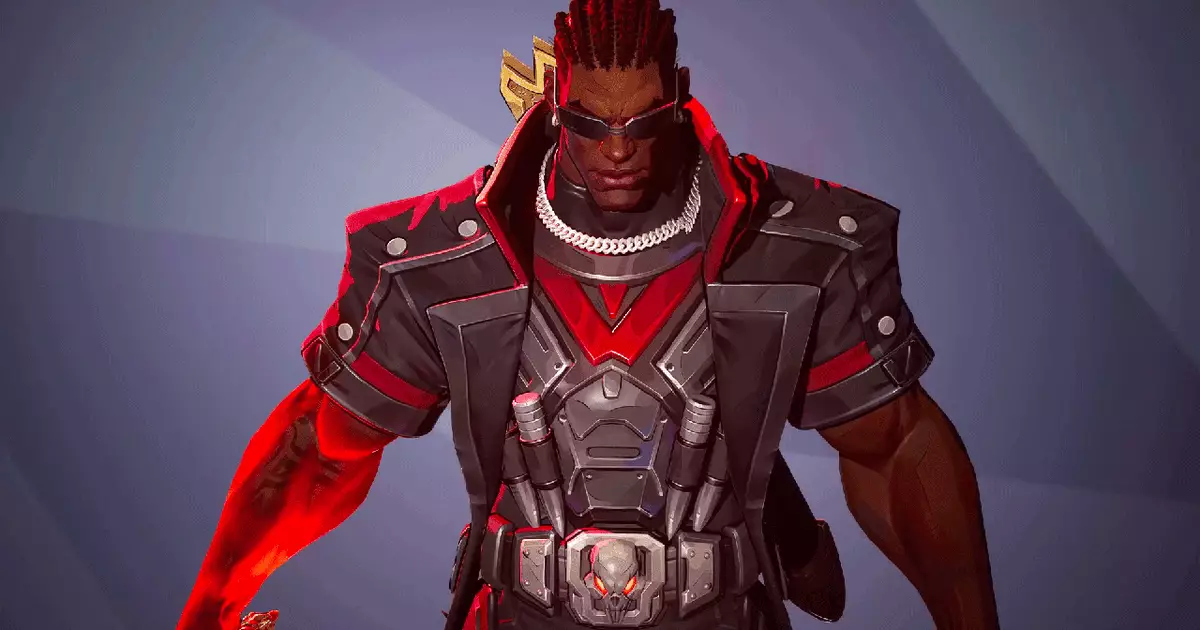
In the realm of competitive gaming, new character introductions often stir excitement—and rightly so. The addition of techno enthusiast Hollowtooth Blade to Marvel Rivals’s roster is a notable moment for fans eager to explore fresh playstyles. Yet, beyond the hype surrounding new heroes, what truly captures attention in the latest update is a broader shift in how game developers approach fairness and discipline. This change reflects a deeper philosophical inquiry into how automated systems interpret player behavior, especially relating to disconnects and AFK incidents. Blade’s arrival, in this context, serves more as a background detail rather than the main event.
The Automation of Morality: A Cynical View
The crux of the update lies in a new penalty system designed to penalize players who leave matches prematurely—be it ragequitting, disconnecting, or AFKing. While at first glance, this seems to promote integrity within the gaming community, a more critical perspective reveals a troubling reliance on algorithmic judgments that lack nuance and empathy. The system operates on a set of predefined thresholds—players disconnect within the first 70 seconds face automatic penalties, while those who disconnect later face fines based on the match outcome and elapsed time. The intention appears noble: discourage bad faith gameplay and foster a more committed player base. But in practice, it risks alienating genuine players caught in unpredictable circumstances.
The Flawed Logic of Time-Based Punishments
One of the most contentious elements is the rigid 70-second window for deeming a disconnect or AFK as intentional or malicious. Why exactly 70 seconds? It seems arbitrary, a decision that could easily overlook legitimate emergencies. A player rushing to help a family member or handle a sudden household crisis might be unfairly branded a quitter, facing penalties as if they displayed pure malice. Conversely, a player who drops out after the time window, perhaps due to frustration or technical issues, might escape harsher consequences—yet be just as culpable in disrupting the game experience. This rigid cutoff betrays a lack of contextual understanding, reducing complex human situations to simple numerical thresholds.
The Problem with Automated Justice
Automatic systems have their place, but gaming is fundamentally a social activity that often involves unpredictable human elements. To rely solely on time stamps and reentry data to judge a player’s motives is to risk punishing sincerity and rewarding the callousness of system design. A player who reconnects after a loss, for example, is treated differently depending on the outcome—rewarded if victorious, penalized if defeated. But this assumes players have control over all circumstances, ignoring real-world emergencies, technical glitches, or temporary distractions. The system, therefore, becomes a blunt instrument, unable to fathom the complex motives behind a player’s actions.
Who Are We Punishing? Ethical Dilemmas in Gaming Policy
By implementing harsh penalties for early disconnects and AFK behavior, developers pose serious ethical questions about the fairness and humanity of their measures. Are we creating a culture that genuinely discourages bad conduct, or are we merely punishing players for life’s unpredictabilities? Is it justifiable to ban someone from competitive matchmaking after repeated infractions, even if those infractions stem from genuine emergencies or technical failures? The risk is that such policies cultivate a climate of suspicion and mistrust, where players fear accidental disconnections and abandon hope of fair treatment.
Are the Thresholds and Timeframes Even Rational?
Another vital critique revolves around the underlying rationale for these policies. The developers likely based their thresholds on internal data—average campaign completion times, hero ability charging durations, or anecdotal player experiences. Yet, these insights are often speculative and may not translate well across diverse player demographics. Why, for instance, is 70 seconds deemed sufficient to judge a player’s intent? The variability of circumstances means that such benchmarks are inherently flawed. The longer the system relies on rigid timeframes, the more it unwittingly encourages players to game the system, even if unintentional, just to avoid penalties.
The Unintended Consequences of Rule Enforcement
Crucially, these policies could inadvertently harm the very community they aim to protect. Punitive measures might discourage new players from engaging with online modes out of fear of unjust penalties. Seasoned players might exploit the system to punish rivals—going AFK deliberately or disconnecting strategically to sabotage opponents. Plus, a reliance on automation reduces personal accountability, replacing human judgment with cold calculations. When human nuance is stripped away, fairness becomes a numbers game—an illusion, at best.
In Closing: Reconsidering the Path to Fair Play
The push towards automated discipline is driven by a desire for cleaner, more competitive gameplay. But it overlooks the complexity of human behavior and the importance of context. Rigid thresholds and timeframes, rooted in assumptions rather than understanding, threaten to distort the social fabric of gaming communities. As developers look to create fair environments, they must balance technological solutions with empathy and discretion, recognizing that behind every disconnect or AFK moment is a human being facing situations beyond the game. True justice in gaming requires more than algorithms—it demands insight, compassion, and a willingness to see players as complex individuals, not just collections of data points.
 English
  Spanish