
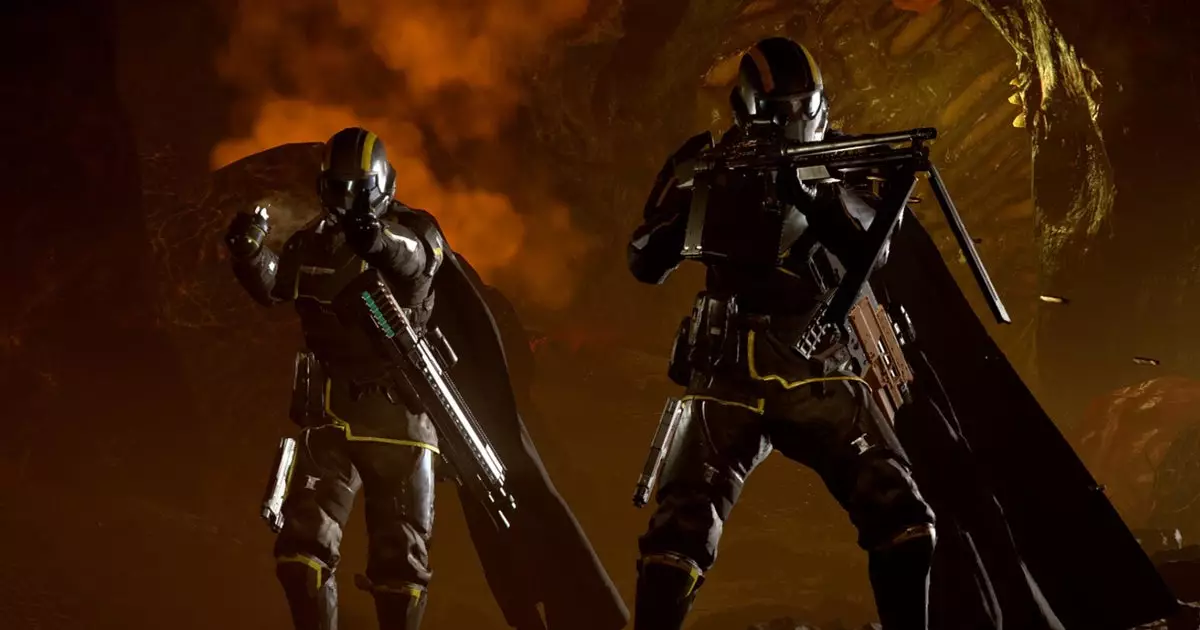
In the wake of recent chaos, Arrowhead’s decision to temporarily suspend the Rupture Strain enemies in Helldivers 2 reveals a commendable commitment to game integrity and player experience. Far from a sign of defeat, this move demonstrates a proactive approach to problem-solving, prioritizing quality over expediency. Instead of stubbornly pushing a flawed feature live, the developers chose to pull the enemies offline for five weeks, allowing them to refine and reshape the encounter dynamics. This decision underscores a fundamental truth in game development: sometimes, stepping back is the fastest way forward.
Certainly, removing an element as pivotal as the Rupture Strain isn’t taken lightly. Yet, it highlights Arrowhead’s unwavering desire to deliver a balanced, fair experience. When a new enemy design causes chaos rather than challenge, the logical course is to halt and reassess rather than to blindly persist. Their transparency—informing the community about the issue and providing a timeline for reintroduction—builds trust and exemplifies responsible development. It shows a willingness to acknowledge flaws, learn, and adapt, rather than mask problems behind forced optimism or hurried patches.
The Complexity of Balancing Chaos and Challenge
The Rupture Warriors were intended to be formidable, perhaps even intimidating, adversaries. However, their current iteration proved excessively disruptive, to the point of alienating players. Their sudden appearance and instant lethal attacks crossed the line from challenge to frustration. This overcorrection revealed an inherent flaw in the balancing process—a reminder that in game design, power must be finely tuned, not just amplified for effect.
Arrowhead’s initial patches aimed at fixing the spawn issues inadvertently exposed deeper design assumptions. The issue was tied to networking: the enemy’s aggressive attacks were linked to server communication glitches that, when unaddressed, led to unfair, unpredictable encounters. This highlights a critical aspect of modern multiplayer gaming: that a bug or imbalance isn’t isolated but intertwined with network stability, player synchronization, and server architecture. Fixing one without considering the others can produce unintended consequences, such as the “overpowered” Rupture Warriors turning into unmanageable pests.
The developers’ candor about these complexities demonstrates an understanding that sound game balancing isn’t merely about tweaking damage numbers or spawn rates; it’s about ensuring systemic harmony. That they chose to temporarily remove the problematic enemies rather than flood the battlefield with unpredictable chaos reflects an appreciation for these intricacies.
Lessons in Community Trust and Developer Responsibility
By opting for transparency—acknowledging issues openly and establishing clear timelines for reimplementation—Arrowhead fosters a robust relationship with their community. In an era where player trust can be fragile, admitting mistakes and outlining concrete steps to resolve them are powerful tools. The decision to “put the enemies back in the box,” as community manager Katherine Baskin put it, signals that the studio values quality over expedience and is willing to take the necessary time to get things right.
This approach also serves as a broader lesson in responsible game development. Releasing content that’s not fully polished can erode goodwill, especially when bugs or balance issues diminish enjoyment. By making the tough call to delay the return of the Rupture Strain, Arrowhead underscores a critical principle: a game’s future depends on its present stability and fairness. Players may be disappointed temporarily, but they will respect a studio’s honesty and dedication to their experience.
Moreover, Arrowhead’s handling of these issues hints at a deeper understanding of their community’s expectations. Gamers crave not just novelty, but also reliability. When developers respond swiftly and transparently to major issues, it fosters loyalty and anticipation for what’s coming next. It’s a bold stance that prioritizes long-term integrity over short-term gains.
Looking Forward: Hope for a Balanced Resurgence
The coming weeks will be pivotal. Arrowhead’s plan to revisit and rework the Rupture Strain enemies signifies an optimistic outlook. The hope is that, once reintroduced, these enemies will pose a genuine challenge without undermining fairness. The development team’s acknowledgment of the enemies’ imbalance and their willingness to overhaul a core aspect reflect resilience and an unwavering commitment to quality.
While the downtime may inconvenience eager players, it’s a necessary pause. Building a challenging, fair, and engaging experience in Helldivers 2 involves iterative refinement. The lessons learned from this process are invaluable—not only for fixing the current issues but also for shaping future updates and enemy designs.
Arrowhead’s handling of the Rupture Strain debacle exemplifies how transparency, strategic decision-making, and a player-centric mindset can elevate a developer’s reputation. The next chapter for Helldivers 2 hinges on these lessons—delivering encounters that are tough yet fair, chaotic yet controlled, and ultimately rewarding for those brave enough to face them.
 English
  Spanish