
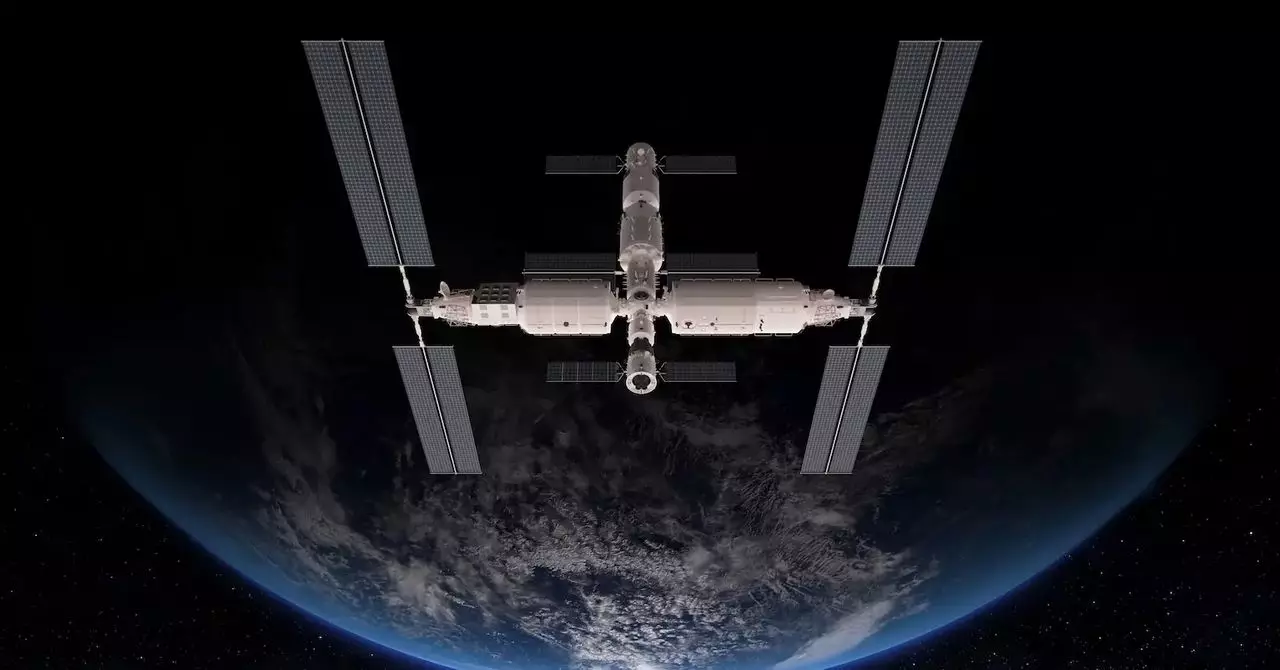
The prevailing narrative surrounding data centers underscores their necessity on Earth—localized, accessible, and seemingly indispensable for modern digital life. However, beneath this conventional wisdom lies a provocative question: could the future of data storage lie beyond our terrestrial boundaries? While current discussions about space-based data centers are largely experimental and viewed through a lens of science fiction, a closer examination reveals both the immense potential and daunting challenges of this audacious concept. Critically assessing the feasibility of orbiting data storage units sheds light on the transformative implications they could have, reshaping not only your perception of data infrastructure but also the strategic calculus of global information ecosystems.
The concept of deploying data centers in space stemmed from a mix of science fiction dreams and technical curiosity. But it’s imperative to recognize that significant hurdles remain before this idea becomes a viable alternative to terrestrial facilities. For instance, the slow processing speeds of current space-based systems highlight a fundamental technological gap. Unlike the high-speed, ultra-efficient data centers on Earth, satellites and off-world installations would struggle with the same problem for decades: data transmission latency and processing power constrained by the limitations of space technology. Moreover, radiation in space adversely affects hardware longevity, raising questions about the durability of these systems and the frequency of repairs—an enterprise notoriously difficult due to the harsh environment.
While some visionaries argue that these issues could be surmountable in the future, the reality today points to an uncomfortably long timeline for technological maturation. The current experimental projects—such as mini data centers in satellites or lunar landers—are primarily proof-of-concept initiatives that demonstrate the possibility but not yet the practicality. Launching a satellite with minimal processing capacity or a moon-based server carrying precious data is emblematic of this nascent stage. These efforts, although ambitious, remain far from touching practical, large-scale deployment due to their prohibitive costs and technical limitations. This is where critical analysis is necessary: without breakthroughs in hardware durability, transmission speed, and cost reduction, space-based data centers risk remaining niche solutions for specialized applications rather than mainstream replacements.
Economic Viability and Strategic Advantages: Will Space Data Centers Ever Make Sense?
The economics of space-enabled data storage pose perhaps the greatest obstacle. Currently, it is vastly more expensive to deploy and operate a data center in orbit than on Earth. Terrestrial centers benefit from well-established infrastructure—massive power grids, cooling systems, and logistics networks—that drastically reduce operating costs. In contrast, launching hardware into space involves astronomical costs, from rocket launch fees to maintenance and repair logistics that are utterly complex and expensive. For a company motivated by profit and efficiency, the question is blunt: why pay a premium for something that offers little immediate advantage?
However, some strategic advantages could tip the scales in favor of space-based data centers. Data centers outside Earth’s regulatory environment would, in theory, escape many of the constraints that complicate terrestrial infrastructure development—such as permitting, local opposition, and environmental regulations. Michelle Hanlon from the University of Mississippi underscores that regulation is sparse in space, meaning companies could sidestep many bureaucratic hurdles faced on Earth. This regulatory libertarianism, combined with the potential for specialized applications like processing space-based data or supporting military and intelligence operations, might justify the initial high costs for specific niche markets. Nonetheless, these advantages remain speculative in the absence of widespread, economically sustainable implementations.
The real challenge lies in achieving cost parity or advantage over terrestrial centers. As things stand, the costs of sending data or hardware to orbit vastly outweigh the benefits. Unless technological breakthroughs—like reusable rockets reducing launch costs or advanced radiation-resistant hardware—materialize, space-based data centers will likely stay confined to experimental and niche applications. They may serve critical functions in areas inaccessible from Earth, such as space observatories or extraterrestrial colonies, but their mainstream adoption hinges on significant economic incentives rooted in technological innovation.
The Future of Off-World Data Infrastructure: A Deliberate and Strategic Choice
Ultimately, the concept of space-based data centers is as much a reflection of strategic aspiration as it is a technological challenge. Forward-thinking organizations could indeed leverage this idea to diversify their data infrastructures, especially in scenarios demanding extreme security or extraterrestrial operations. The ongoing experiments, albeit costly and limited in scope, serve as crucial pilot projects that inform future possibilities.
Yet, it’s equally important to remain skeptical of overly optimistic visions. Without rapid advancements in hardware resilience, power management, and cost-efficient space travel, the full realization of this vision remains distant. So, should we dismiss space-based data centers as mere science fiction? Far from it. Instead, we ought to see them as a strategic frontier—an area ripe for incremental progress and innovation that might one day complement, or even transform, the terrestrial data landscape. For now, the reality starkly contrasts with the bold promises, but the potential remains an inspiring beacon guiding the future of digital infrastructure beyond the confines of Earth.
 Spanish
  English