
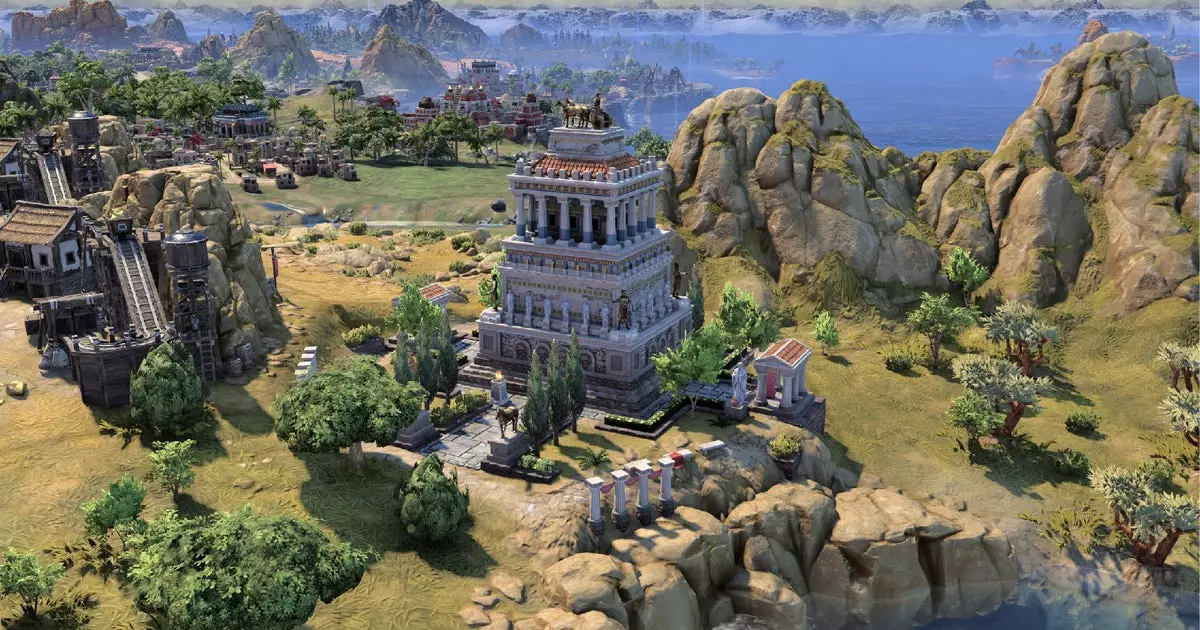
In the intricate world of 4X strategy games, developers constantly grapple with balancing innovation, stability, and player satisfaction. Firaxis, the visionary behind the Civilization series, exemplifies this dynamic by implementing comprehensive updates that reshape gameplay mechanics, UI, and mod compatibility. The latest iteration, version 1.2.4, underscores their commitment to evolving the experience while also exposing the challenges inherent in such substantial transitions. This update is not merely a patch; it’s a watershed moment that reveals the complex dance between technological progress and player engagement. While some might dismiss these changes as mere technicalities, they embody the ongoing struggle to refine a beloved game while preserving its core identity.
Firaxis’s decision to overhaul the UI workflow demonstrates a bold step towards future-proofing the game. Transitioning to a more reactive and flexible interface aims to streamline user interactions and ease development burdens. However, this comes with immediate repercussions—namely, widespread mod breakage and compatibility issues. The developers explicitly acknowledged this—highlighting the inherent risks of deep structural changes—and provided players with options to revert to a previous version. This honesty is crucial; it reveals their recognition of the delicate balance between innovation and stability. Such transparency fosters trust, yet it also underscores the fragility of complex game ecosystems where even minor backend shifts ripple into widespread disruptions.
Furthermore, Firaxis’s rationale illuminates a strategic vision for sustainable game development. Their long-term goal is a more adaptable, scalable UI that can better serve subsequent updates. Yet, the short-term pain—manifested as broken mods and frustrated players—serves as a stark reminder that progress often comes at a cost. This scenario exemplifies the ongoing tension in game updates: prioritizing technological advancement without losing touch with the player community’s needs. A thoughtful approach, including the option to rollback, demonstrates their awareness and respect for the diverse ways players engage with their content.
Balancing Power and Fairness: Wonder & Civic Rebalancing
Beyond the backend upheavals, the update’s gameplay adjustments emphasize a crucial theme in modern strategy games: delicate balancing. Wonders, historically pivotal in turning tides of victory, have been subtly tuned to prevent them from becoming shortcuts to dominance. The Erdene Zuu, for example, can now be accessed earlier—giving players more strategic tools without infringing on game equity. Meanwhile, relics like the Colossus and Monks Mound have been repositioned within civic trees, subtly shifting their influence on the game’s pacing and strategy.
Interestingly, adjustments to iconic monuments like the Pyramids reflect a nuanced understanding of their role. Previously, their placement and utility could unbalance gameplay, especially when situated in non-traditional terrains. The ban on pyramids in snowy tundras remains, preserving the authenticity and challenge of environmental considerations. Nerfing certain wonder effects ensures that victory paths reliant solely on iconic structures are no longer trivial, compelling players to diversify their strategies.
This recalibration speaks to an overarching philosophy: making victories more meaningful and less reliant on singular exploits. It encourages players to explore richer tactics, fostering a more engaging and less predictable experience. It also injects a dose of fairness, reminding us that even the most iconic elements must be kept in check to maintain competitive integrity.
The Future of AI and Game Mechanics: A Push for Smarter Challenges
A fascinating aspect of the recent update is the focus on AI improvements. Firaxis has ventured beyond mere cosmetic and static balance tweaks, actively tuning AI behaviors to create more challenging and realistic opponents. In particular, AI adjustments aim to prevent bizarre or overly predictable moves—like accepting peace offers when disaster is imminent—thus elevating the game’s strategic complexity.
Such changes signify a deeper understanding: AI is not just an opponent but a central component that shapes the player’s experience. Improving its reasoning and decision-making makes each game more dynamic and demanding, pushing players to adapt continually. This shift underscores a broader trend in strategy game development: elevating AI to a role that genuinely challenges players rather than simply reacting mechanically. It’s a move that should, in theory, reinvigorate long-time fans and attract newcomers eager for a genuine test of acumen.
Firaxis’s ongoing interface improvements further support this vision. A more intuitive UI reduces cognitive overload, allowing players to focus on strategic decisions rather than wrestling with the game’s menus or hidden information. If executed well, this convergence of smarter AI and streamlined interfaces promises a more immersive and satisfying experience—attributes that directly influence the series’ longevity and reputation.
A Critical Perspective on Ongoing Development and Community Impact
While these updates reveal ambitious intentions, they also expose a fundamental challenge: maintaining community trust amid inevitable upheaval. The fact that Firaxis openly discussed the mod-breaking consequences highlights an honest approach, but it also underscores the fragility of a game ecosystem heavily reliant on community-driven content. Mods have become a cornerstone for many players, enriching and personalizing the experience; thus, substantial changes that destabilize this content can alienate segments of the audience.
Yet, the developers’ transparent explanation—that the migration to a new UI system, although disruptive, is a necessary foundation—reflects a responsible attitude. It acknowledges the temporary pain for long-term gain. Still, one cannot overlook that such fundamental modifications raise questions about the pace of change and the risk of alienating the core player base. Striking a balance between innovation and stability remains the holy grail of game development.
Moreover, the tendency for rapid iterative updates—monthly, in this case—can both be a strength and a weakness. It illustrates an agile approach willing to respond and adapt, but it also risks fragmenting the community if updates are perceived as too frequent or disruptive. The challenge will be whether Firaxis can sustain this delicate rhythm while keeping their community engaged and confident that their investments—be it time, mods, or strategy—are respected and preserved in the evolving landscape.
This ongoing evolution promises a brighter future for the series but also necessitates a careful watch on how developers manage change. Their ability to balance technological progress with community conservation will ultimately determine whether Civilization continues to captivate or alienate its devoted fans.
 Spanish
  English