
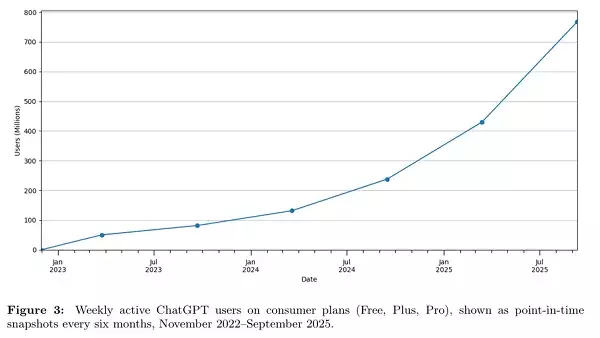
Over the past few years, ChatGPT has transcended the boundaries of mere novelty, emerging as a fundamental tool in daily life and work. Its exponential growth from a modest user base to hundreds of millions of active participants underscores a seismic shift in the way society perceives and interacts with artificial intelligence. This rapid adoption is not accidental; it signals a genuine shift in user expectations and the broader integration of AI as an essential companion in decision-making, learning, and productivity. The data reveals that ChatGPT is no longer just a chatbot; it has become a versatile platform that adapts to the evolving needs of its users, reflecting a broader societal desire for intelligent, accessible, and personalized assistance.
The Changing Landscape of User Intent and Interaction
Analyzing the evolution of ChatGPT usage exposes intriguing behavioral patterns. The predominant use case—comprising approximately 77% of interactions—centers around Practical Guidance, seeking advice on tasks, tutorials, or careening knowledge that enhances personal and professional competencies. This consistency highlights a crucial insight: users increasingly rely on AI as a readily available mentor or guide, alleviating the need to hunt for resources or ask experts. Conversely, the decline in writing-related conversations signals a recalibration of expectations around AI’s capabilities. While initial anticipations may have pegged ChatGPT as a content creator, many users now perceive it more as an information portal and problem-solver rather than a substitute for human writers. Interestingly, the rising trend in Seeking Information from 14% to 24% illustrates that people view ChatGPT as an intelligent search companion—akin to a next-generation Google—capable of providing contextually rich, nuanced responses that traditional search engines may not offer.
From Doing Toward Deciphering and Decision-Making
What is perhaps most insightful is the shifting purpose behind user interactions. Early on, there was a significant focus on Tasks—asking ChatGPT to draft emails, generate code, or assist with creative projects. However, over time, the data indicates a preference tilt toward Information-Seeking and Reflection. Users are increasingly turning to ChatGPT not just to do things but to help make sense of complex problems or facilitate informed decisions. This transition suggests a matured perception of AI—viewed less as a mere tool for automation and more as an autonomous-minded partner capable of enhancing cognitive functions. The decline in “Doing” as an explicit purpose shouldn’t be read as disinterest but as a sign of users seeking deeper, more meaningful engagement with AI—demanding it to be more intuitive and insightful.
The Implication of These Trends for the Future of AI
The evolving usage patterns challenge many assumptions about AI’s role and potential. While writing—original content creation—has seen a decline from 36% to 24% in the last year, this shouldn’t diminish AI’s potential in creative domains. Instead, it prompts a reevaluation of how we measure AI success. Is the goal for AI to replace human creativity, or is it better suited to augment and facilitate human endeavors? The data suggests that users prefer AI tools that empower them to understand, make decisions, and learn more efficiently rather than replacing human efforts outright. The versatility and adaptability of ChatGPT demonstrate that the most valuable AI applications are those that serve as accessible, intelligent partners—supporting us in navigating the complexities of modern life with confidence and clarity.
The trajectory of ChatGPT’s rising popularity and the changing nature of its use showcase a fundamental transformation in the human-AI relationship. It’s clear that people are no longer content with AI as a novelty but see it as an integral part of their intellectual and practical toolkit. This shift underscores a future where AI is less a futuristic concept and more a tangible, dependable ally—tailored to help us learn, decide, and grow. If harnessed thoughtfully, the ongoing evolution of ChatGPT signals profound opportunities for innovation, personalized learning, and smarter decision-making—gifts that will extend beyond individual users to reshape entire industries and societal norms.
 Spanish
  English