
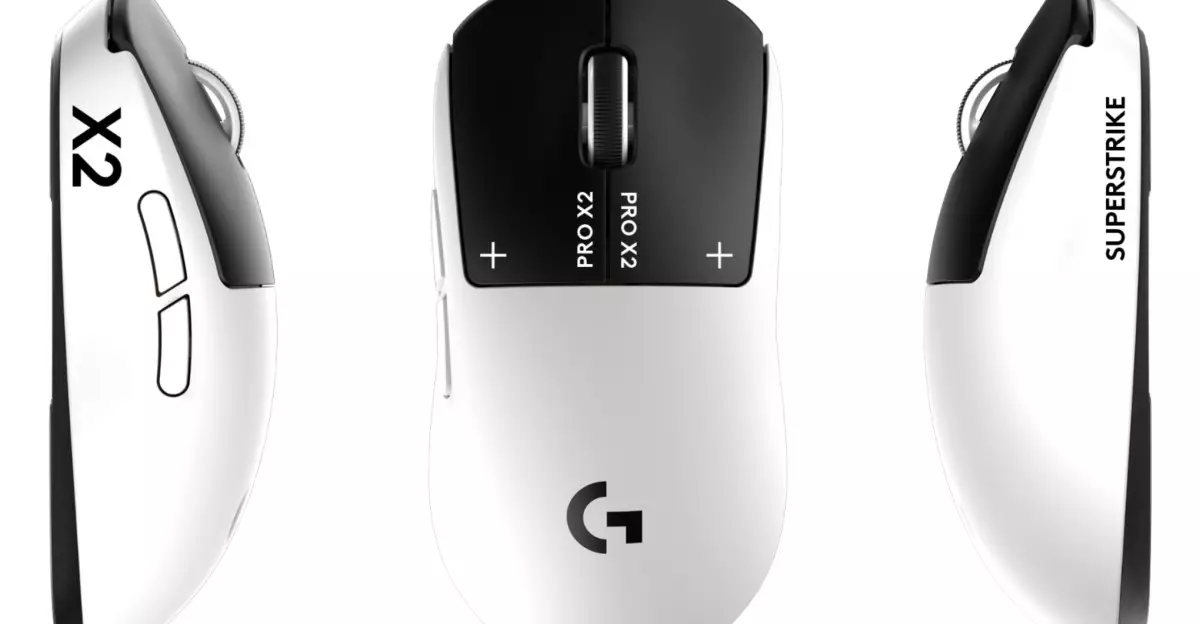
In the rapidly evolving landscape of gaming peripherals, Logitech’s latest release, the Pro X2 Superstrike, stands out as a testament to bold innovation. Traditionally, gaming mice have relied heavily on mechanical switches to deliver tactile feedback. However, the Superstrike boldly abandons this convention, integrating cutting-edge haptic technology that aims to redefine how players perceive and execute clicks. This shift isn’t just a gimmick; it’s a strategic reimagining of what input devices can offer in terms of responsiveness and customization.
The core of this innovation is the Haptic Inductive Trigger System (HITS), a sophisticated analog sensor technology that employs haptic actuators to simulate the sensation of a click. By eliminating physical switches and replacing them with digital haptic feedback, Logitech aims to deliver a more consistent and customizable experience. This approach isn’t merely about novelty; it addresses long-standing issues such as click fatigue and inconsistencies caused by mechanical wear over time. As an enthusiast and critic of gaming hardware, I perceive this move as a potential game-changer, although the real-world benefits will depend heavily on implementation and user adaptation.
Speed and Responsiveness Reimagined
What truly sets the Superstrike apart is its emphasis on speed. Featuring an ultra-low 0.6mm travel for the buttons and the ability to support up to five customizable rapid trigger reset points, this mouse is built for precision timing and fast reflexes. The rapid trigger mechanism, more familiar to keyboard gamers, allows the sensor to reset swiftly when slightly lifted, enabling near-instantaneous re-engagement. This feature alone promises to cut down reaction time, which could be advantageous in competitive scenarios where milliseconds matter.
Logitech’s claim of reducing latency by up to 30 milliseconds is ambitious. While skeptics might argue that most gamers’ reaction times are not sensitive enough to notice such minimal improvements, the combination of rapid trigger support and ultra-responsive sensors could create a tangible advantage for high-level players. The capacity for granular customization through Logitech’s G Hub software further empowers gamers to tailor their experience precisely. However, the question remains: will this level of fine-tuning translate into real-world performance gains, or is it a feature that appeals mostly to enthusiasts and tech aficionados?
Design Philosophy: Light, Agile, and Future-Ready
Characterized by its light weight—only 65 grams—the Superstrike exhibits a design philosophy focused on agility and comfort. It features Logitech’s reputable Hero 2 sensor, renowned for high accuracy and power efficiency, supporting wireless operation at an astonishing 8,000Hz polling rate. The wireless connectivity via Lightspeed USB-A dongle signifies a commitment to minimal latency, despite my personal reservations about whether such extraordinarily high polling rates provide noticeable benefits over more traditional settings.
Furthermore, the introduction of the Superlight 2C hints at Logitech’s recognition of diverse preferences among gamers. Lighter, smaller, and still packed with high-end features, the 2C caters to those with smaller hands or who prefer a more portable, nimble device. The $159.99 price point aligns with premium gaming peripherals, positioning these mice as significant investments for serious gamers.
From an ergonomic standpoint, I believe that combining ultra-lightweight design with highly customizable features could push the boundaries of what competitive gaming mice can achieve. The emphasis on quick responses, low weight, and tailored feedback demonstrates a clear understanding of modern gamers’ needs—though the real challenge lies in the execution and whether users will embrace such innovative technology.
Critical Reflection and Future Outlook
While the innovations embedded in the Superstrike are undeniably impressive, I approach them with a healthy dose of skepticism. The integration of haptic feedback, while promising, risks becoming a sensory overload or a distracting novelty if not perfectly calibrated. Additionally, the high polling rate, though technologically fascinating, may not be practically perceptible to the average user. It’s crucial that Logitech ensures these features enhance performance without complicating usability.
Moreover, the move away from traditional mechanical switches raises questions about durability and tactile satisfaction. Will haptic feedback truly replicate the satisfying “click,” or will it lack the satisfaction that many gamers associate with their hardware? Only time and user feedback will determine whether this technological shift will be widely adopted or remain a niche innovation.
The Logitech Superstrike represents a daring and innovative stride into the future of gaming mice. By blending analog sensing with advanced haptic feedback, Logitech is charting a new course—one that could redefine responsiveness and customization in competitive gaming. Whether this leap proves to be a lasting evolution or a passing experiment depends largely on how well gamers adapt to and embrace this bold new technology.
 Spanish
  English