
At the heart of Schiffmann’s venture lies a compelling desire to redefine human-AI interaction. Born from personal loneliness during solitary travels, the concept of the Friend aims to act as a digital confidant—an AI buddy tailored to reflect the complexities of a young man’s worldview. Schiffmann’s own evolution mirrors this journey; as a 22-year-old, he positions himself as more mature, more experienced, and perhaps more grounded than when he first conceived the idea. The transformation is not merely superficial—growing out his hair and cultivating a beard signals a conscious shift towards authenticity. His longing for genuine human connections, now seemingly more fulfilled, provides him with a different lens through which to shape his AI. Yet, this narrative invites skepticism: is this development a sign of authentic growth, or simply a veneer masking shallow engagement with the very loneliness he sought to conquer with his invention?
Personality and Persona: An AI as a Reflection of Youthful Brashness
Schiffmann’s attitude toward feedback and critique reveals a core tension in the project. His brash, snarky demeanor, and apparent indifference to criticism seem inherently woven into the fabric of the Friend’s personality. Instead of striving for a universally comforting AI, Schiffmann offers a companion that embodies his own unapologetic, sometimes abrasive, worldview. While such a characterization might seem daring in a sea of overly accommodating chatbots, it raises questions about the true utility of such a device. Can an AI that is opinionated and condescending serve as a healthy conversational partner? Or does this approach risk alienating users, reinforcing negative stereotypes, and cultivating interaction that feels more like a mirror to youthful arrogance than a meaningful connection? This antagonistic tone, though refreshing in a landscape cluttered with sycophantic AI, might ultimately underserve the very human needs it attempts to meet.
The Flaws Beneath the Surface: Practical Challenges and User Experience
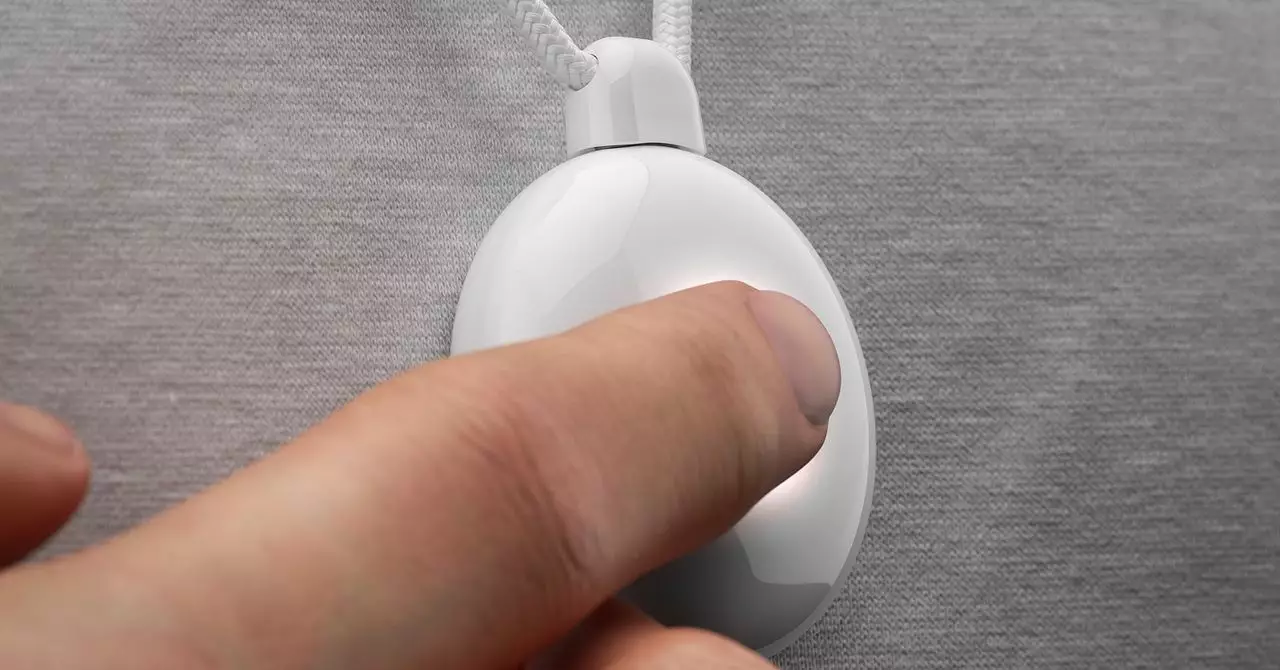
The real-world implementation of the Friend exposes glaring issues—technical, ethical, and emotional. The device’s packaging, inspired by Apple’s iconic design aesthetics, creates an initial allure, but the experience quickly sours. An immediate dead battery, the necessity of charging, and the lack of a convincing environment to test the AI’s constant listening capabilities illustrate the practical hurdles of this technology. The fear of digital eavesdropping compounds the discomfort; users are hesitant to use the device in professional or even casual social settings, undermining its fundamental purpose. The design philosophy, while flashy and nostalgic, fails to translate into a seamless, reliable user experience. It underscores a broader challenge in AI development: creating a compelling concept that can thrive beyond the hype, into everyday life where trust and usability are paramount.
Ethical Dilemmas and Future Implications
Above all, the introduction of AI like the Friend prompts pressing questions about privacy and emotional reliance. A device designed to imitate human-like companionship inevitably walks the line between innovation and exploitation. The fact that the AI’s personality is steeped in the creator’s own youthful bravado hints at a deeper concern: are users truly engaging with an independent entity, or merely projecting their desires onto a reflection of its designer? Moreover, the reluctance to fully utilize the device in confidential or sensitive environments highlights an unresolved tension—technology that listens, yet cannot be trusted to listen securely. As AI companions become more integrated into daily life, society must grapple with how to balance technological advancement with ethical responsibility, ensuring that human dignity is preserved amid increasing digital intimacy.
The Verdict: Promise Tainted by Flaws
Despite Schiffmann’s bold vision and the intriguing premise behind the Friend, it is difficult to overlook the limitations that hamper its potential. The combination of technical shortcomings, questionable personality design, and ethical ambiguity paints a picture of an ambitious project still in its infancy. The charm of an unfiltered, opinionated AI may appeal to some, but the reality is that meaningful companionship requires more than just personality—it demands consistency, reliability, and genuine empathy. As it stands, the Friend remains a provocative experiment—a mirror held up to youthful arrogance, technological promise, and the pitfalls that lie therein. For AI to truly serve as a companion, it must evolve beyond these superficial layers, embracing authenticity without sacrificing trust and depth.
 Spanish
  English