
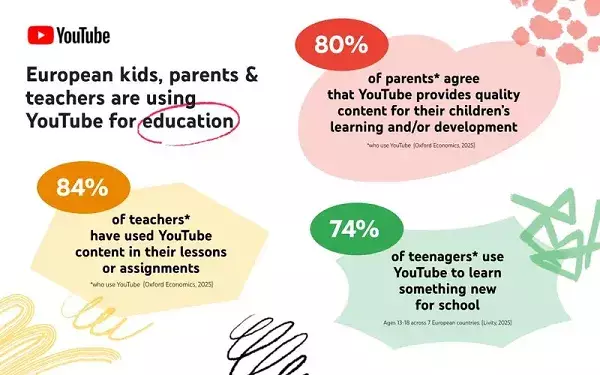
In an era dominated by social media and instant access to information, YouTube emerges as more than just a platform for entertainment; it is fast becoming an indispensable tool for learning among youth worldwide. The recent study conducted by YouTube, collaborating with youth consultancy Livity, unequivocally demonstrates that a significant majority of adolescents are turning to the platform to satisfy their curiosity and enhance their academic understanding. This shift in perception signifies a critical turning point—where YouTube may transition from being perceived solely as a leisure activity to a vital educational resource.
At the heart of this transformation lies an undeniable truth: today’s young learners value convenience and immediacy. With over 70% of teenagers reported to use YouTube for both academic and recreational learning, it’s clear that the platform’s versatility caters to the diverse needs of youth. Instead of passive content consumption, students are engaging in self-directed learning, accessing tutorials, explanatory videos, and expert insights across subjects ranging from science to history. Recognizing this phenomenon could shift societal attitudes, urging educators and policymakers to rethink the role of digital platforms in formal and informal education.
Challenges and Opportunities for Educational Content Creators
The rising importance of YouTube as an educational resource presents a lucrative opportunity for content creators to curate high-quality, pedagogical videos designed explicitly for learning. Unlike traditional classrooms constrained by resources or geographic barriers, digital creators have the potential to reach millions, transforming the way knowledge is disseminated. This democratization of information empowers students from various socioeconomic backgrounds to access quality content on their own terms.
However, the rapid growth of educational content on YouTube also raises critical challenges. The platform must ensure that the information provided is accurate, reliable, and aligns with educational standards. Misinformation and poorly sourced content pose real threats to learning integrity, especially when young minds rely heavily on the platform for academic support. It becomes imperative for YouTube—and the broader community— to identify and promote authoritative creators, perhaps even collaborating with educational institutions, to reinforce trustworthy knowledge dissemination.
The future of digital learning on YouTube hinges on community partnerships and self-regulation. If content creators and platforms work together to establish quality benchmarks, the potential for transforming education at scale becomes immensely promising.
The Political Landscape: Navigating Regulations and Defending Digital Learning Rights
As YouTube’s educational benefits become more evident, a conflicting political landscape emerges. Several countries, including Australia, France, and Norway, are contemplating restrictions on social media usage for minors, citing concerns over screen time, mental health, and online safety. These policies risk inadvertently limiting access to valuable educational content that many young people actively seek and rely upon.
YouTube’s staunch defense—highlighting its positive role in learning—reflects a broader struggle to redefine online safety without compromising access to beneficial resources. The platform argues that its educational content significantly surpasses entertainment and should be exempt from restrictive laws aimed at curbing youth exposure to social media. Yet, such arguments face hurdles as policymakers remain cautious, often prioritizing safety over potential academic advantages.
The outcome of this regulatory battle will shape not just YouTube’s operational policies but also set precedents for how digital education is integrated into children’s lives globally. If YouTube can successfully position itself as an educational advocate rather than merely a social media platform, it might influence regulations to favor access to informative, age-appropriate content.
Reimagining the Digital Education Paradigm
What does the future hold for YouTube’s role in education? Its potential to become a cornerstone of modern learning hinges on strategic adaptation. Embracing its educational identity could involve developing dedicated channels, partnering with schools, and supporting content that abides by pedagogical standards. Such initiatives would not only enhance user trust but also align with emerging educational policies focused on digital literacy and blended learning.
Moreover, viewing YouTube through this expanded lens challenges traditional perceptions of digital safety. Instead of a battleground between regulation and access, it can evolve into a collaborative ecosystem where learners, educators, and platforms co-create safe, enriching environments for knowledge sharing. As the platform continues to showcase its utility in fostering curiosity and continuous learning, it may pave the way for smarter, more inclusive educational strategies in the digital age.
Ultimately, the narrative must shift from viewing platforms like YouTube as adversaries of safety to recognizing them as partners in shaping the future of education. If policymakers and tech giants work together, emphasizing quality, safety, and accessibility, a new chapter in digital learning could emerge—one where YouTube’s full potential is harnessed for the betterment of global education.
 Spanish
  English