
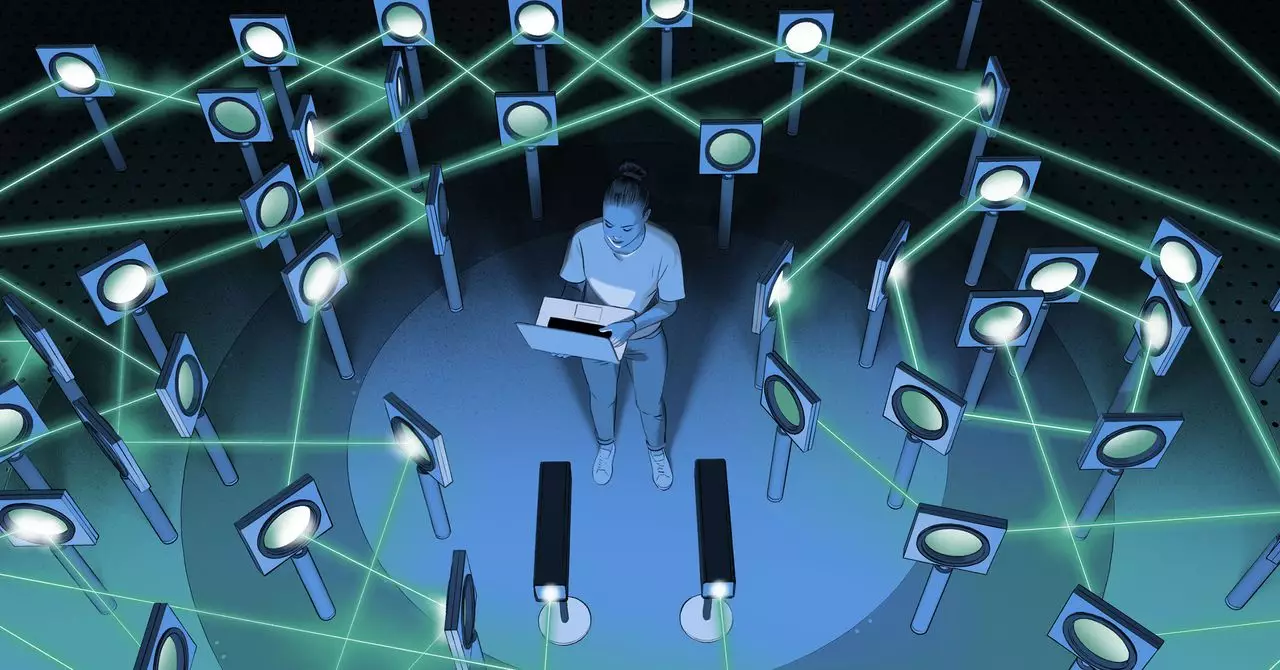
For decades, the pursuit of understanding the universe seemed locked in an unyielding grind. Instruments like LIGO, which has dedicated over 40 years of meticulous effort from thousands of scientists, embody this relentless human endeavor. Despite such monumental efforts, breakthroughs remained elusive—until now. The advent of artificial intelligence (AI) represents a seismic shift, not merely as a tool to assist but as a catalyst capable of challenging entrenched assumptions and igniting breakthroughs long thought unattainable. While AI has yet to directly unveil a transformative physical law, its emergence as a formidable companion to theorists and experimentalists is undeniable. It serves as an intellectual torchbearer, illuminating hidden patterns within complex data troves that have historically overwhelmed traditional analytic methods.
This transformative potential underscores a deeper truth: AI is not only a technological addition but a paradigm-shifting lens that refocuses how science is conducted. It propels researchers beyond incremental progress, compelling us to reconsider what is possible when artificial intelligence becomes integrated into physics’ most profound questions. This shift invites us to view AI as a co-creator—one that, by discovering patterns humanity failed to recognize, pushes us closer to unlocking the universe’s deepest secrets.
Challenging Conventional Wisdom with Machine Ingenuity
One of AI’s most compelling contributions lies in its capacity to analyze colossal datasets—such as those generated by the Large Hadron Collider—with astonishing efficiency. Traditionally, physicists searched for symmetries and anomalies through painstaking manual analysis, a process that often limited exploration to known theoretical frameworks. AI algorithms, however, can detect subtle symmetries and patterns, revealing structural features of nature long hidden beneath the noise. The discovery of symmetries related to Einstein’s relativity exemplifies this power: what was once a purely theoretical insight now finds empirical support through the unbiased eye of machine learning.
Moreover, AI is instrumental in formulating new mathematical descriptions of cosmic phenomena. For instance, recent efforts have employed machine learning to derive equations characterizing the behavior of dark matter—a mysterious form of matter that dominates the universe’s mass yet remains invisible to detection. Such advances suggest that AI is capable of not only assisting in data analysis but also in hypothesizing and formalizing new laws of nature. For the scientific community, this marks a turning point: humans learn from AI’s findings, setting the stage for a more symbiotic relationship between human intuition and machine intelligence.
The Quantum Realm: A Playground for AI Innovation
At the frontier of quantum physics, AI’s role becomes even more captivating. Quantum phenomena defy classical intuitions—objects exist in probabilistic states, and entangled particles exhibit instantaneous correlations across vast distances. For decades, physicists grappled with understanding and harnessing entanglement, often constrained by traditional experimental setups and conceptual frameworks.
Enter AI, revolutionizing how quantum experiments are designed and understood. Researchers now employ machine learning algorithms to model intricate quantum states, identify optimal configurations, and even conceive novel experimental protocols. For instance, the concept of entanglement swapping—a process where two particles become entangled without direct interaction—was initially a theoretical construct. Through software inspired by neural networks and graph theory, scientists like Krenn and colleagues simulate complex optical experiments by representing them as interconnected graphs. These models not only optimize experimental parameters but also inspire new methodologies, transforming quantum entanglement from a puzzling oddity into a toolbox for quantum communication and computing.
This marriage of AI and quantum physics signals a transition into an era where quantum phenomena are no longer merely concepts to be understood but resources to be engineered and exploited. Such progress accelerates the quest for practical quantum technologies, from ultra-secure communication networks to powerful quantum computers—fields that stand to redefine technological evolution in the coming decades.
Transforming Scientific Strategy and Theoretical Approaches
Crucially, AI’s influence extends beyond experimental design; it embodies a new strategic approach for physics as a discipline. Instead of solely relying on human intuition and theoretical conjecture, scientists now leverage AI to generate hypotheses and mathematical relationships directly from data. This shifts the paradigm from hypothesis-driven research to data-driven discovery—one where machines act as creative partners rather than mere tools.
Take the example of researchers using Python-based software to map out complex optical experiments. By representing experimental setups as graphs with nodes and edges—each symbolizing components like beam splitters and photon paths—they construct a vast landscape of potential configurations. AI algorithms traverse this space, uncovering configurations that might elude human intuition. Such approaches could lead to the discovery of novel quantum states, more efficient communication protocols, or even unforeseen physical phenomena. The human role evolves from sole theorist to facilitator, guiding AI to probe possibilities beyond current imagination.
This paradigm shift demands a reevaluation of what constitutes scientific creativity. Rather than viewing AI as a threatening replacement, we must recognize it as an extension of human ingenuity—an enabler of innovation that enhances our capacity to interrogate nature’s deepest mysteries more thoroughly and efficiently. It fosters a culture where ideas are not solely confined by human cognitive limits but are expanded through machine-assisted exploration, heralding a future where science advances at an unprecedented pace.
 Spanish
  English