
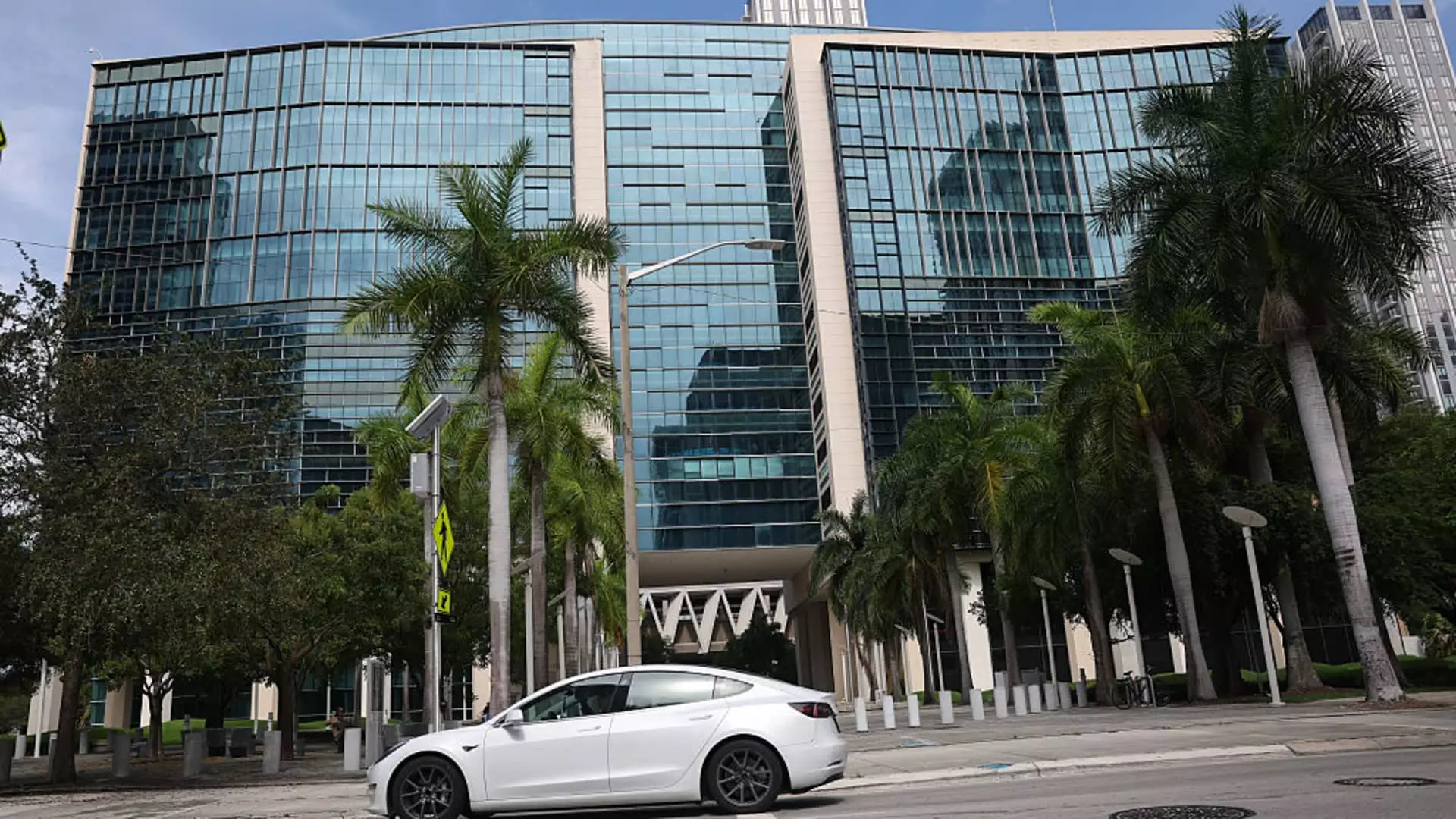
The recent legal battle facing Tesla shocks not only for its size but for its profound implications in the realm of autonomous vehicle safety. As the first federal court case of its kind targeting Tesla’s Autopilot system, this lawsuit ignites a spotlight on the very promises and assurances that have long been marketed to consumers and shareholders alike. With plaintiffs seeking an astonishing $345 million in damages—highlighting both emotional devastation and punitive measures—this case raises critical questions about how automakers represent their emerging technologies. Is Tesla genuinely committed to safety, or are profit motives compromising human lives?
Both the financial stakes and moral question mark position this suit as a pivotal moment. This case isn’t just about one tragic accident; it’s about whether a technology that promises safety can truly deliver when under scrutiny. The outcome could dictate not just Tesla’s future in legal and public domains but also influence industry standards for automated driving systems worldwide. If the jury finds Tesla liable, it would shift the narrative from techno-optimism to remorseful accountability.
A Deep Dive into the Controversy: Autopilot and the Overhyped Promise of Safety
Central to the dispute is Autopilot, Tesla’s semi-automated driving system that, at least in marketing, appears to promise a future where human error is minimized. However, evidence presented in court suggests these messages might have been dangerously misleading. Plaintiffs argue that Tesla overhyped Autopilot’s capabilities, leading drivers—confident in a system that wasn’t foolproof—to misuse it in situations that warranted full human oversight.
The tragic 2019 crash in Key Largo encapsulates these concerns. George McGee, the Tesla owner, relied on Autopilot while distracted, assuming it would brake to avoid obstacles—an assumption that proved devastating. The crash resulted in a young woman’s death and a string of injuries, illustrating that automation remains fallible, especially when drivers are disinformed or overconfident. If Tesla’s marketing led users to believe their system was safer than it really was, then the company’s ethical responsibility comes into sharp focus.
Beyond individual safety, this case raises deeper questions: Should Tesla have been clearer about Autopilot’s limitations? Did the company push automation technology prematurely, valuing innovation and market dominance over cautious deployment? Evidence during the trial suggests that Tesla’s communication may have been strategic, possibly downplaying the risks involved. A guilty verdict would serve as a powerful message that technological hype cannot supersede responsible disclosure.
The Power of Promises Made and the Reality of Risk
Elon Musk’s public statements have long painted Autopilot as a breakthrough in automotive safety. Yet, underlying these promises are potential misrepresentations that may have contributed to the accident. The discrepancy between what Tesla claimed and what the safety data demonstrates fuels the core of plaintiffs’ allegations that the company and Musk misled investors and consumers.
This isn’t just a legal dispute; it’s an ethical confrontation. If Tesla knew or should have known that Autopilot posed risks, then adherence to corporate responsibility demands accountability. The court’s review of past statements and marketing campaigns may set a precedent about truthfulness in promoting advanced driver-assistance systems. The pressure to dominate the EV and autonomous vehicle landscape could have blinded Tesla to the need for transparency, at great human cost.
The court’s acknowledgment that Tesla may have recklessly prioritized product development and profits over safety echoes a broader industry concern: Are autonomous systems being rushed to market without sufficient safeguards? If the jury finds Tesla’s actions reckless, the implications will reverberate across the automotive industry. It could catalyze tighter regulations, greater scrutiny, and a re-evaluation of how and when autonomous features should be marketed and deployed.
Implications Beyond the Courtroom: A Battle for Trust
This case’s impact extends far beyond legal boundaries. It hits at the core of consumer trust and corporate integrity in the fast-evolving world of autonomous technology. Tesla’s defense revolves around the notion that their aim is to save lives—a claim that, if contradicted by the evidence, could undermine the entire autonomous vehicle industry’s credibility.
For shareholders and customers alike, the case raises vital questions about risk management and corporate ethics. Will Tesla’s strategic communication and aggressive innovation approach be exposed as shortsighted or deliberately misleading? The courtroom drama underscores the importance of genuine safety assurance, not just marketing hype.
As the court deliberates, the broader industry watches anxiously. The verdict could serve as a catalyst for much-needed regulation, emphasizing that technological advancements must not come at the expense of human life and trust. It is a stark reminder that ambitious innovation must always be tempered with responsibility.
This battle is more than a courtroom confrontation—it is a moral reckoning with the promise and peril of automation. The outcome will determine whether Tesla’s vision of a driverless future is rooted in reality or built on the sand of unfulfilled promises. In the end, society must decide: Will we accept a future where profit and progress outweigh the paramount importance of safety?
 Spanish
  English