
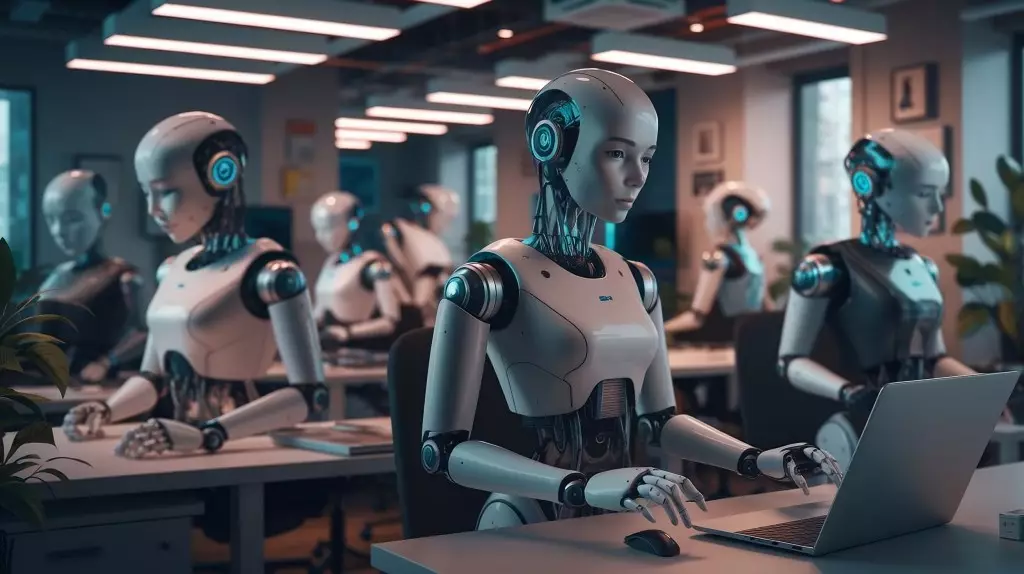
The advent of advanced artificial intelligence tools is dramatically reshaping the landscape of software development. Tasks traditionally associated with junior programmers—like scripting, basic HTML, and routine devops setup—are increasingly being delegated to AI assistants such as ChatGPT, GitHub Copilot, and Amazon CodeWhisperer. This technological leap signifies more than just a speed boost; it signals a paradigm shift in how we understand the role of entry-level developers and the structure of the entire industry.
No longer can junior developers expect to simply follow set procedures and gradually accumulate skills. AI’s proficiency in executing repetitive, rule-based tasks effectively renders the foundational steps of learning to code obsolete in many contexts. As a result, the pathways for new entrants are transforming into more complex, nuanced roles that demand a broader understanding of systems, problem formulation, and strategic thinking—all alongside AI collaboration. This change underscores a fundamental truth: software engineering is evolving from a purely technical craft into a strategic discipline where machines augment human intelligence.
Challenging the Traditional Learning Trajectory
The traditional trajectory of a budding programmer involved mastering fundamentals, debugging minor issues, and gradually taking on larger design responsibilities. Today, this model is under threat. New programmers are often asked to contribute at levels once deemed impossible for novices—tasks that require understanding system architecture, user experience considerations, and strategic decision-making. This implies that the learning process must shift from rote memorization and trial-and-error to cultivating a deeper conceptual grasp of how software operates and how to harness AI effectively.
This raises critical questions about education and mentorship. If AI can handle the coding chores, should new developers be discouraged from manual practice? The answer lies in recognizing that genuine mastery stems from understanding underlying principles rather than merely generating code snippets. Developing this knowledge foundation allows future engineers to steer AI tools, set meaningful goals, and avoid becoming passive consumers of automation. A generation of developers proficient in both technical skills and strategic thinking will be better equipped not only to survive but to thrive amid rapid technological change.
Human Skills in an AI-Driven Ecosystem
As AI becomes embedded within every stage of software creation, the demand for human insight shifts towards system design, user needs, and project vision. The most valuable professionals in the future will not be those who produce flawless code but those who understand what should be built and why it matters. These individuals will likely embody hybrid roles, combining elements of product management, user experience, and technical expertise. Their primary task will be translating abstract ideas into actionable directives that leverage AI’s capabilities for optimal results.
This shift necessitates a reevaluation of team dynamics. The once rigid division of labor—front-end, back-end, DevOps, QA—will give way to more fluid structures, where a single, well-versed AI-augmented developer manages entire pipelines and workflows. It’s not about eliminating jobs but transforming them. Human input will increasingly focus on strategic guidance, ethical considerations, and quality control rather than the nitty-gritty of implementation. Collaboration will revolve around defining project goals, setting priorities, and overseeing AI-generated outputs rather than manually crafting every component.
The Rise of Hybrid Roles and Strategic Thinkers
Looking ahead, the role of the developer will evolve into something more multifaceted. In five to seven years, the archetype of a developer might resemble a hybrid professional—someone who possesses technical fluency, creative problem-solving skills, and an aptitude for product thinking. These individuals will be adept at orchestrating AI to generate solutions while maintaining oversight on overall system coherence.
This transition could be seen as intimidating but also as a golden opportunity. Challenges aside, the future offers a platform for those with diverse talents—creativity, empathy, strategic vision—to shine. They will be the individuals who can translate user needs into functional, innovative solutions, managing complex AI systems instead of just writing lines of code. Technical knowledge will still be vital, but it will serve as a foundation upon which broader, more strategic capabilities are built.
Adapting to a New Reality: The Power of Human Ingenuity
The industry is at a crossroads, and how we respond will determine the future of software development. The decline of traditional junior coding roles is not a sign of decline but a call to elevate our skills and redefine what it means to be a developer. Instead of lamenting lost tasks, we should focus on nurturing talents that AI cannot replicate—creativity, critical thinking, ethical judgment, and nuanced problem-solving.
In this emerging landscape, success favors those willing to embrace change, learn new skills, and see AI as a partner rather than a competitor. Becoming adept at guiding AI tools, designing systems that capitalize on automation, and understanding the broad context of projects will be the hallmarks of the most influential developers. Ultimately, the future belongs to those who can blend human ingenuity with artificial intelligence, creating software that is not only functional but also meaningful and innovative.
 Spanish
  English