
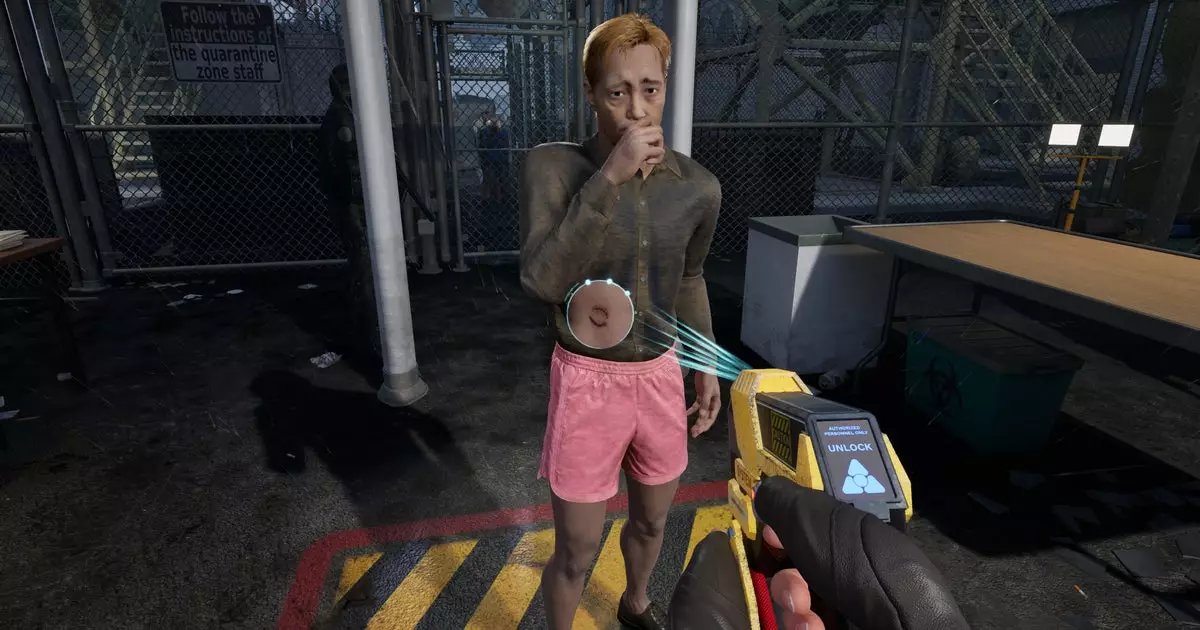
In the landscape of survival games, few titles compel players to confront their morality as directly as “Quarantine Zone: The Last Check.” Unlike traditional zombie games that focus solely on shooting hordes or scavenging, this game demands meticulous judgment, placing players in the role of gatekeepers at a critical juncture of societal collapse. This shift from action to nuanced decision-making demonstrates an evolution in game design — moving toward experiences that challenge players’ ethical boundaries. Faced with a continual stream of refugees, the player must distinguish between the truly infected and those merely ill or innocent, often with limited resources and under intense time pressure. Such mechanics evoke comparisons to real-world border politics—where every decision carries weight and consequences—making the game resonate far beyond its grim setting.
The moral landscape in “Quarantine Zone” pushes players into uncomfortable territory. Do you quarantine the possibly infected and risk their death, or risk a breach that could unleash chaos? Do you recognize the subtle signs of infection or rely solely on resource-consuming tests? These dilemmas echo the real-world dilemmas faced at borders in times of crisis, where every choice involves weighing public safety against compassion and individual rights. The game’s capacity to make players reflect on these moral quandaries elevates it from mere entertainment to an insightful commentary on the human condition.
Innovative Mechanics and Their Reflective Power
What sets “Quarantine Zone” apart is its immersive yet strategic inspection process. Utilizing tools like UV flashlights, thermometers, and manual scanners, players conduct examinations that simulate real medical assessments but with a deliberate, game-driven twist. These mechanics serve a dual purpose: they create tension and engage players in a delicate process of evidence gathering. The limited supplies amplify the challenge, forcing players to prioritize whom to test and whom to dismiss, effectively transforming each decision into a microcosm of resource management under duress.
Furthermore, the game’s wave survival component introduces a persistent threat, turning a routine checkpoint into a battleground against relentless zombie hordes. The synchronization of inspection and defense scenarios reinforces an overarching message: survival hinges on careful judgment, swift action, and resourcefulness. This combination transforms “Quarantine Zone” from a simple simulation into a reflection of how chaos tests our capacity for discernment and resilience. As days progress, the stakes escalate, and the moral weight of your choices becomes more palpable; each decision ripples through to the game’s ending, shaping your experience and the story you create.
Critique and Unanticipated Depths
While at face value, “Quarantine Zone” resembles a dark, intense game of bureaucratic paranoia and strategic defense, there is room for a more insightful critique embedded within its design. The overarching theme seems to toy with notions of authority, suspicion, and societal breakdown—yet the narrative tends to stay rooted in gameplay mechanics rather than delving into political commentary. This abstention may be a missed opportunity. A game with such a setup could serve as a potent allegory for real-world issues like immigration, disease control, and the ethics of quarantine—topics fraught with controversy and human cost.
Notably, the game’s emphasis on visual clues and mechanical tests as determinants of a person’s fate reflects a superficial understanding of complex health and human rights issues. Absolute reliance on such indicators risks oversimplifying human stories into binary categories of safe or dangerous. A more compelling approach might involve more nuanced interactions, such as dialogue choices or background storytelling, which could serve to humanize characters and complicate the moral calculus. This critique, though, must be balanced against the game’s intent: a tense, particulate simulation emphasizing individual judgment over broader societal critique.
A Playful Counterpoint: Humanity Over Fear
Amidst its grim commentary, there is a tantalizing hint at a more humor-infused, human-centered version of the game. Imagine a scenario where the player is tasked with determining whether the approaching figure is Buster Keaton in disguise or just a harmless dinosaur, rather than a zombie menace. This whimsy underscores an overlooked truth: in times of crisis, humor and empathy can act as vital coping mechanisms.
Replacing the heavy shadow of infection with a lighthearted quest for identity invites players to consider the importance of human connection and the absurdity inherent in chaos. It suggests that in the face of devastation, perhaps the most powerful act is to see the person behind the threat—whether they are a silent, silent Keaton or a cheerful dinosaur. Such a shift could infuse the game with joyful absurdity, reminding us that even amid horror, humanity’s resilience often manifests in humor and kindness. While the original game leans into stark realism, this alternative vision champions an optimistic outlook: that understanding and compassion are as crucial as vigilance.
In essence, “Quarantine Zone” functions not just as a challenging simulation but also as a mirror reflecting our own societal fears and moral intuition. Whether through its intense mechanics or its satirical potential, it invites us to reconsider what it means to protect what matters—and whether sometimes, the greatest strength lies in empathy rather than suspicion.
 Spanish
  English