
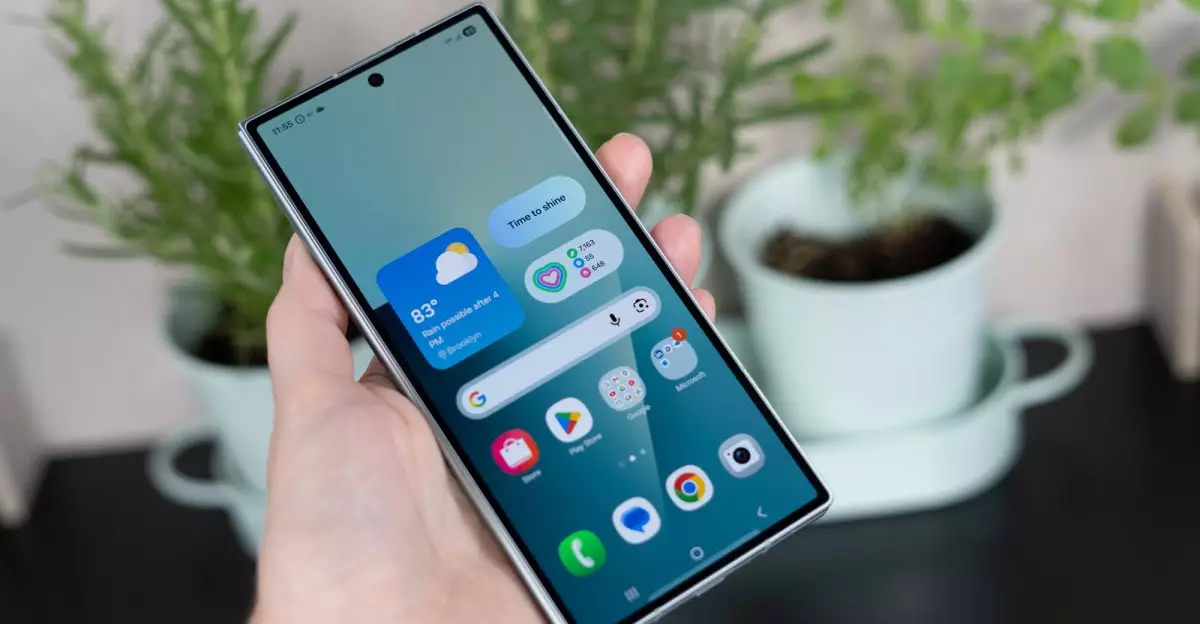
The Samsung Galaxy Z Fold 7 is not just a new iteration; it’s a bold stride into the next generation of foldable smartphones. Marketed as Samsung’s slimmest foldable yet at merely 8.9mm when folded, it signifies a remarkable achievement in design innovation. This sleekness elevates the device from mere technology to a statement piece — seamlessly blending portability with a tablet-like experience. Although its hardware performance aligns closely with the previous Z Fold 6, its lightweight profile and expanded outer screen size, now measuring 6.5 inches, make it feel more like a conventional phone while maintaining the versatility of a foldable device.
However, this leap forward comes with a hefty price tag. Priced at approximately $2,000, the Z Fold 7 positions itself in the premium segment, appealing to early adopters and tech enthusiasts willing to invest heavily in cutting-edge tech. Yet, this price point sparks a crucial question: does the innovation justify the cost? Samsung’s approach appears to cater more toward status-conscious consumers, rather than the pragmatic buyers seeking affordability. This makes the importance of strategic preorders and exclusive promotions all the more critical for potential buyers eager to offset the expense.
Preorder Deals and Expiry Deadlines
The clock is ticking for those interested in acquiring the Galaxy Z Fold 7 with enticing incentives. Preorders open immediately ahead of the device’s official launch date on July 25th, but with a catch — the preorder perks are only available until July 24th. These limited-time offers include benefits that can significantly reduce the effective cost of the device, transforming what might otherwise be a prohibitive investment into a more palatable purchase.
Samsung’s preorder campaign is aggressive, with trade-in deals that can cut the price by up to 50%. The company is offering up to $1,000 in trade-in credit for last-generation devices like the Z Fold 6 and Galaxy S22 Ultra. Such promotions are valuable because they provide instant discounts of around $1,000 — bringing the net price down to roughly $999.99. For those who already own compatible phones, this could be the push needed to justify the upgrade. However, it is essential to understand that the specifics of trade-in credit vary depending on where and how you buy. Samsung’s online store grants immediate discounts even with carrier trade-ins, but purchasing directly from carriers involves a different process, often paid out over monthly installments.
Major carriers like AT&T, Verizon, and T-Mobile have their own lucrative trade-in offers, with credits reaching $1,100 over 36 months. This is a significant incentive, especially for customers on high-tier unlimited plans, making the device more accessible albeit through long-term financial arrangements. Carriers accept a wide range of devices regardless of age or condition, which broadens eligibility but also complicates the decision-making process. These installment plans might appear favorable in the short term but raise questions about long-term affordability and overall device ownership costs.
Strategic Choices: Retailers, Carriers, and Promotions
The purchasing landscape for the Z Fold 7 is as diverse as the device itself. Consumers can choose from Samsung’s online store, carrier outlets, or major retailers like Best Buy and Amazon. Each channel offers different incentives and flexibility, which merits careful consideration. For example, Samsung’s online storefront alone delivers a $50 Samsung credit usable on accessories — a tempting proposition considering the high price of the device. If you forego trading in an old device, you get an added $300, turning a high-cost purchase into an opportunity to bundle essential accessories like earbuds, smartwatches, or protective cases.
Retailers such as Amazon and Best Buy are going further by offering the 512GB variant at no additional charge through July 24th. This promotion effectively reduces the purchase price from $1,999 to $1,899.99, luring buyers with substantial savings. Conversely, carriers like AT&T and Verizon restrict options to the base 256GB model at the full retail price, which could be a deal-breaker for many enthusiasts looking for more storage space without extra charges. Additionally, carrier-specific promotions often bundle installment plans, which might seem attractive initially but could translate into more costs over time.
Another interesting nuance is the fallibility of promotional credits. While Samsung’s direct purchase offers substantial accessory credits, they are “use-it-or-lose-it.” Buyers must spend the credit at checkout; failing to do so means losing the benefit entirely. Such stipulations task consumers with planning their accessory purchases carefully to maximize value.
Is the Investment Justified?
The Galaxy Z Fold 7 epitomizes the zenith of foldable smartphone technology. Yet, its high price underscores a pivotal truth: innovation in this segment is still a luxury. For consumers already invested in Samsung’s ecosystem or those craving cutting-edge tech, the device offers undeniable allure and functionality. Its ultra-thin profile, larger outer screen, and the promise of seamless multitasking make it stand apart from conventional smartphones.
However, a critical perspective reveals that performance upgrades are incremental rather than revolutionary. The core hardware remains similar to the previous generation, which raises questions about whether consumers are truly getting value for their money. Moreover, the ecosystem incentives, such as trade-in credits and accessory discounts, serve as necessary tools to soften the blow of steep pricing — but they are ultimately temporary solutions. The high cost not only dissuades casual buyers but also brings into question the sustainability of foldable tech becoming mainstream without significant price reductions.
If one is willing to navigate the complex web of promotions, trade-ins, and carrier plans, the Z Fold 7 can be a smart buy in disguise. It’s a device designed for early adopters, fans of innovation, and those who see their smartphone as an extension of their lifestyle and status. Yet, for the average consumer seeking practicality, the question remains: is this device’s groundbreaking design worth the hefty investment, especially considering its marginal hardware upgrades? The answer hinges less on the device’s technical prowess and more on individual priorities, patience, and willingness to capitalize on fleeting promotions.
 Spanish
  English