
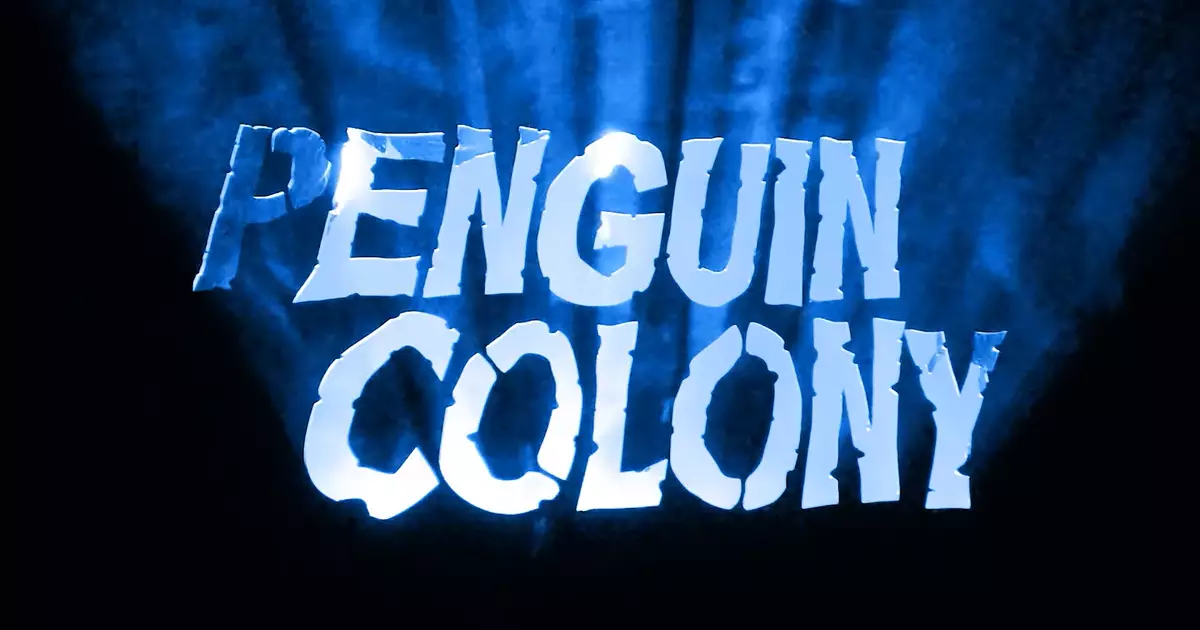
In the landscape of modern gaming, few concepts challenge traditional genre conventions quite like the upcoming “Penguin Colony.” This project reimagines an Antarctic open-world adventure infused with Lovecraftian horror, yet it does so through the playful lens of penguins. What makes this undertaking genuinely interesting isn’t merely its whimsical premise but the audacity to blend political critique, psychological depth, and cosmic dread within a seemingly lighthearted package. It’s a testament to the developers’ willingness to push boundaries—taking a franchise of cute, flightless birds and positioning them at the center of a narrative that grapples with themes of survival, manipulation, and the unknown.
The boldness of this idea is both its strength and its risk. In a gaming industry increasingly obsessed with mass appeal, the decision to ground a cosmic horror narrative in penguin antics is provocative. The game refuses to be pigeonholed into simple entertainment; instead, it invites players to explore larger questions about colonialism, foreignness, and the destructive incomprehensibility of the universe. As the game’s trailer echoes the aesthetic of John Carpenter’s “The Thing” and is narrated by Lenval Brown—famous for his work on “Disco Elysium”—the project signals an intention to treat its subject matter with seriousness and artistic flair.
Deconstructing the Lovecraftian Hype Through Political Lens
One can’t discuss “Penguin Colony” without pondering its underlying critique of Lovecraft’s worldview. Lovecraft’s stories often depict foreign lands as mysterious, dangerous, and steeped in ancient evil—an outlook tainted with racial and cultural implications. The developers’ background, especially their work on “Umurangi Generation,” suggests that they are keenly aware of the problematic aspects inherent in Lovecraft’s myths. It’s likely no coincidence that some dialogue in the trailer appears in Māori—a language that symbolizes resistance to colonial erasure and cultural dominance.
This layered narrative may serve as a subtle rebuke of Lovecraftian notions of “the other,” framing the ancient forces not just as cosmic entities but as reflections of colonization’s enduring trauma. The game’s premise of an explorer manipulated by Old Ones—possibly local penguins—becomes a metaphor for colonized peoples pushed into subservience or forced to manipulate their environment for survival. It’s an aggressive political statement cloaked in absurdity, challenging players to see beyond the surface and confront uncomfortable truths about how civilizations interact with the mysterious and the oppressive.
Gameplay and Its Surprising Depth
On the surface, “Penguin Colony” seems to be a quirky adventure featuring sliding on icebergs and diving into subglacial darkness. Yet, the game’s mechanic of unlocking different penguins—each with unique abilities—pushes toward complex gameplay that encourages strategic thinking within its frosty environment. From tiny penguins that squeeze through tight spaces to those capable of swimming—each variation becomes a metaphor for adaptability and resilience in the face of existential threats.
The game isn’t simply a sandbox spectacle; it appears to embed allegories about identity and agency. Playing as a baby penguin might limit certain actions but also opens up avenues for exploration that aren’t available to more mature birds. In a cosmic sense, such choices symbolize how different individuals—or nations—can navigate the same oppressive universe from vastly divergent perspectives. The choice of penguin identities becomes a cryptic reflection of political and cultural negotiation, set against the bleak backdrop of Antarctic surrealism.
A Cultural and Artistic Experiment
What elevates “Penguin Colony” beyond its surface silliness is its capacity as an artistic experiment—melding political commentary with horror, humor, and environmental critique. The decision to infuse the game with Māori language and aesthetics signals an intent to diversify narrative perspectives, challenging the canonical whiteness of Lovecraft’s mythos. It invites players into a universe where the monstrous and the marginalized intersect, suggesting that perhaps the greatest horror lies not in the cosmic entities but in humanity’s (and penguins’) inability—or refusal—to confront their complicity in systemic imperialism.
The mere idea that a game about penguins can serve as a portal to such profound critique is revolutionary. It proposes that even the most seemingly trivial subjects can be harnessed to probe internal fears and societal flaws. “Penguin Colony” doesn’t just entertain; it dares to disturb, confront, and evoke uncomfortable truths, all while sliding gracefully on icy surfaces or slipping into the depths of Antarctic dread.
In this unconventional scenario, the universe’s impending collapse seems almost secondary to the ongoing cultural conversation. The game’s playful absurdity acts as a shield and a lens—allowing critical engagement with themes of alienation, colonization, and cosmic insignificance, all through the icy veneer of penguin politics. This is a project that refuses to be dismissed as mere novelty—it’s a radical commentary decked out in Antarctic chic, daring players to think differently about what horror, politics, and humor can truly achieve.
 English
  Spanish