
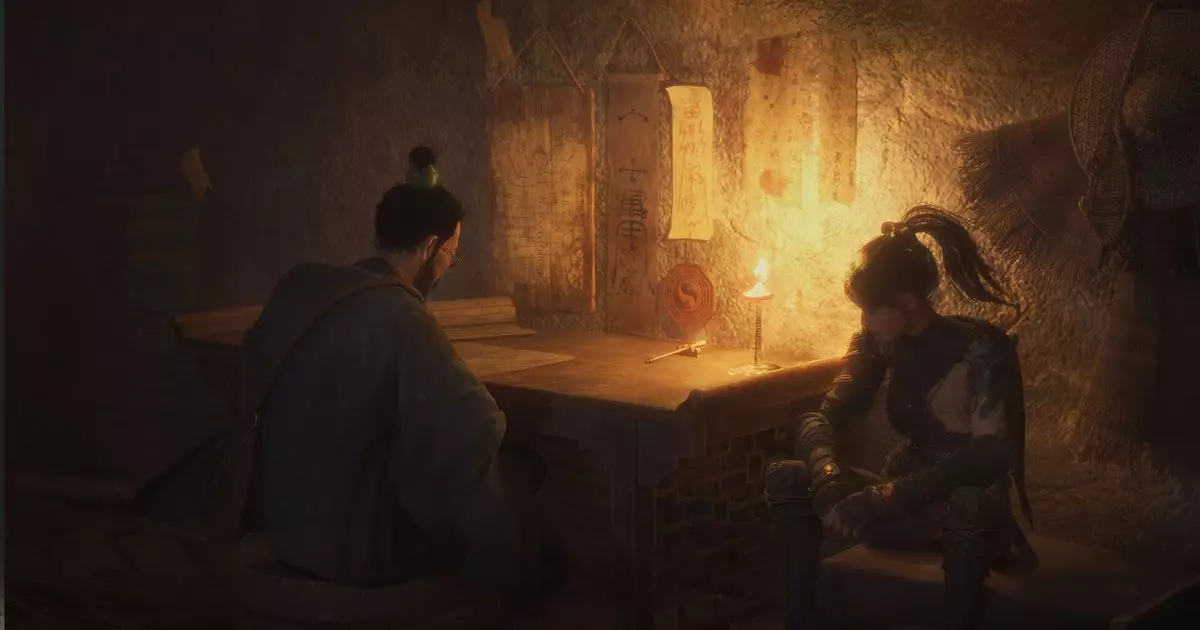
The recent update to Wuchang: Fallen Feathers underscores a recurring tension in modern gaming—the conflict between developer intentions and community expectations. The patch 1.5, which diminishes the difficulty by rendering bosses incapable of being killed outright, appears to be a response, at least in part, to the pressure exerted by a vocal segment of players. While developers might pursue a particular vision of their game, they must also recognize that gaming communities are not monolithic. Players who thrive on challenge often find such unfailable bosses frustrating, as it dilutes the core thrill of overcoming formidable foes. In this case, the developers seem to have compromised the game’s challenge, shadowing its narrative depth with exhaustion mechanics that strip away the visceral satisfaction of victory. The subsequent community reactions, and the rise of dedicated mods attempting to reverse these changes, highlight a fundamental truth: player agency is vital, not just in how gamers experience a game but in how they shape its evolution.
The Impact on Narrative and Player Immersion
Alterations like those introduced in patch 1.5 resonate beyond mechanics—they threaten the very fabric of storytelling within the game. Wuchang’s bosses, tied to the Ming dynasty and bound within a rich historical narrative, serve as more than mere obstacles. They are narrative anchors, embodying the legacy, struggle, and cultural symbolism woven into the game’s fabric. When these bosses are reduced to exhausted husks rather than potent adversaries, it diminishes their story significance. Instead of confronting mythic enemies reflective of China’s regal history, players encounter performance checks reduced to mere endurance tests. This erodes immersion and disconnects players from the rich atmosphere the game attempts to craft. By robbing players of the narrative weight cornered within these bosses’ deaths, the patch inadvertently undermines the storytelling power of challenge itself. It’s a reminder that mechanics cannot be divorced from their narrative context without risking the dilution of meaning and engagement.
Modding as a Defiant Tool for Player Choice
In response, the dedicated modding community demonstrates how collective ingenuity can serve as a resistance movement against questionable updates. AVK95’s “Rollback censorship patch” exemplifies that hunger for preserving original gameplay experiences. While the process is undeniably cumbersome—requiring manual file manipulation and precise configuration—the effort underscores how players refuse to be passive recipients of developer changes that compromise their preferred gaming experience. It also raises a broader question about the role of mods: should they be necessary to restore what was once considered standard? Ideally, game developers would provide official options, allowing players to choose between different versions or difficulty settings. However, in the absence of such features—exacerbated by platforms like Steam lacking built-in rollback options—mods become the only viable avenue for preserving player agency. This situation underscores a deeper issue of transparency and respect for community preferences in game updates, raising the necessity for more flexible and player-centric development practices.
Challenges and Ethical Considerations in Modding
While mods can empower players, they are not without their pitfalls. The process of rolling back patches involves technical hurdles that can be daunting even for dedicated enthusiasts. Moreover, the existence of mods such as AVK95’s is a reminder that developers often do not account for all possible player preferences. This disparity can lead to fragmentation within the community—those willing and able to mod their games versus those who cannot or choose not to. Additionally, mods may sometimes infringe on developers’ intentions, raising questions about intellectual property and the ethics of altering games post-release. Yet, in scenarios like Wuchang’s controversial patch, mods serve a vital role in advocating for player agency and game integrity. They exemplify a form of digital activism, where the community actively safeguards the core experience against perceived compromises. The challenge remains: how do developers and players collaborate to foster a gaming environment that respects creative vision while accommodating diverse player preferences?
The Future of Player-Driven Content and Developer Responsibility
This situation with Wuchang highlights the importance of ongoing dialogue between creators and their audiences. Developers need to recognize that updates should enhance—not diminish—the core appeal of a game. Offering flexible options, such as difficulty sliders or multiple versions, could mitigate the fallout from controversial patches. Concurrently, modding communities fill a necessary gap, proving that player ingenuity can preserve the authenticity of an experience, even amid corporate or developer missteps. The potential for future games lies in nurturing these dual paths: providing official tools for customization while empowering passionate modders to shape the game beyond its initial blueprint. To truly honor player agency, studios must embrace community feedback and prioritize adaptive, transparent updating practices. Only then can the balance between developer vision and player choice be maintained, fostering a gaming landscape where challenge and story are preserved in tandem with innovation and responsiveness.
 English
  Spanish