
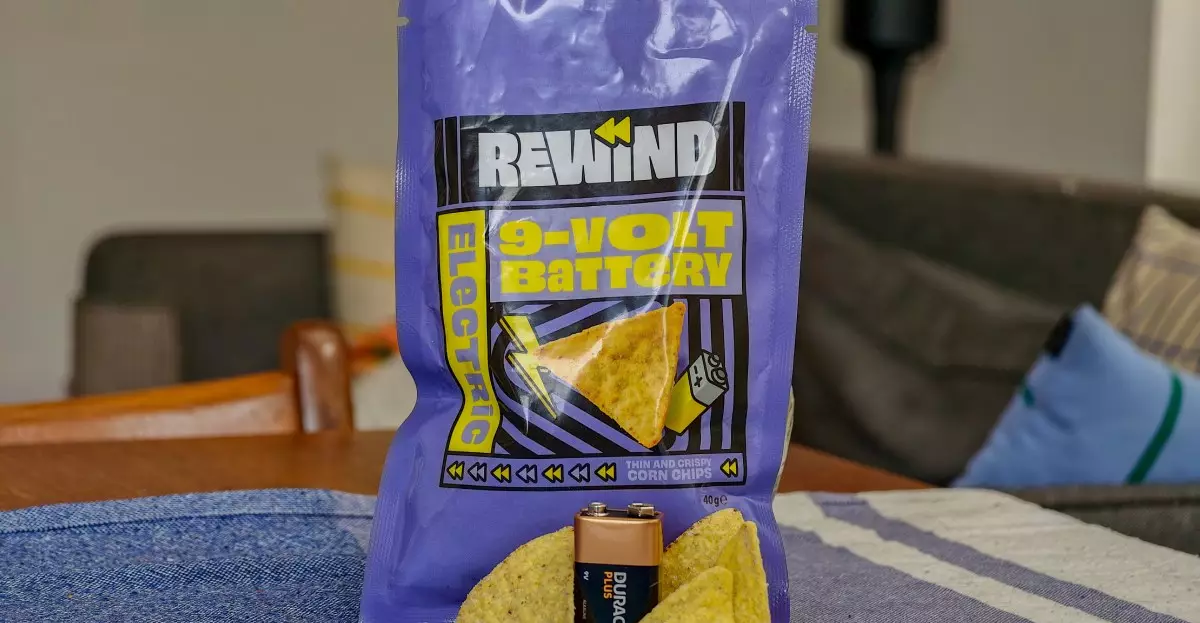
In a world saturated with conventional snack options, brands continually seek the boundaries of innovation—sometimes crossing into the realm of the bizarre. The recent launch of Rewind’s limited-edition chips, flavored to emulate the taste and sensation of licking a 9V battery, exemplifies this daring spirit. While most would dismiss such an idea as mere marketing stunt, it reveals a deeper desire within consumers: fascination with sensory extremes rooted in childhood memories. These chips are not just about taste—they promise an experiential journey that challenges our understanding of flavor and texture, blending nostalgia with the thrill of the unexpected.
However, the ambition to create something so unconventional should be scrutinized for both its creative intent and its appeal. Are we truly craving these sensations, or are we simply seduced by the shock value? The answer probably lies somewhere in the middle. Certainly, the concept stirs curiosity, but it also raises questions about sensory manipulation in food. Are these flavors genuinely enjoyable, or are they a fleeting gimmick designed to capture attention in a digital age where novelty sells? The exploration of “battery-inspired” taste is a testament to our collective willingness to push culinary boundaries—yet it also exposes a tendency to romanticize discomfort or challenge our taste expectations for the sake of headlines.
The Science and Art of Creating Electric Flavors
Behind the scenes, food scientists and flavor developers have crafted this experience meticulously. The flavor profile hinges on a delicate balance of acidic and mineral notes, simulating the metallic tang seemingly reminiscent of battery metal. With ingredients like citric acid and sodium bicarbonate, the process produces a tingling, almost electric sensation on the tongue. The addition of mineral salts enhances the metallic aftertaste, amplifying the sensory illusion.
What’s fascinating here is how flavor innovation is guided not solely by taste, but by a desire to evoke tactile and emotional responses. The chef, Mattias Larsson, describes the flavor as an “unusual brief,” highlighting the experimental nature of the project. This pursuit of the extraordinary becomes a playground for food technologists eager to blur the lines between culinary art and sensory science. Nevertheless, such pursuits come with ethical considerations—are these flavors truly safe, and do they risk desensitizing consumers to more natural tastes? While the chips themselves only metaphorically mimic the battery experience, the challenge remains: how far should culinary innovation go in pursuit of shock and novelty?
The Cultural Fascination with Quirky and Provocative Foods
The broader context for these electric-inspired snacks extends beyond mere curiosity. They reflect a cultural obsession with the quirky, the shocking, and the boundary-pushing. In an era where social media amplifies the weirdest trends, such products ignite conversation, generate viral attention, and serve as conversation starters. This isn’t just about eating chips; it’s about participating in a shared act of experimentation—a modern-day rite of culinary daring.
Yet, this trend also underscores a deeper question: Are we losing our connection to traditional, comforting flavors in favor of the novelty of discomfort? As much as these chips evoke a sense of childhood rebellion, they also reveal our collective desire to challenge the status quo, to find excitement in the unexpected. Whether these flavors will carve out a permanent niche or simply serve as fleeting viral phenomena remains to be seen. Still, what’s undeniable is that they reflect a willingness—perhaps even an obsession—to push the boundaries of taste in ways that are, quite frankly, both fascinating and a little unsettling.
 English
  Spanish