
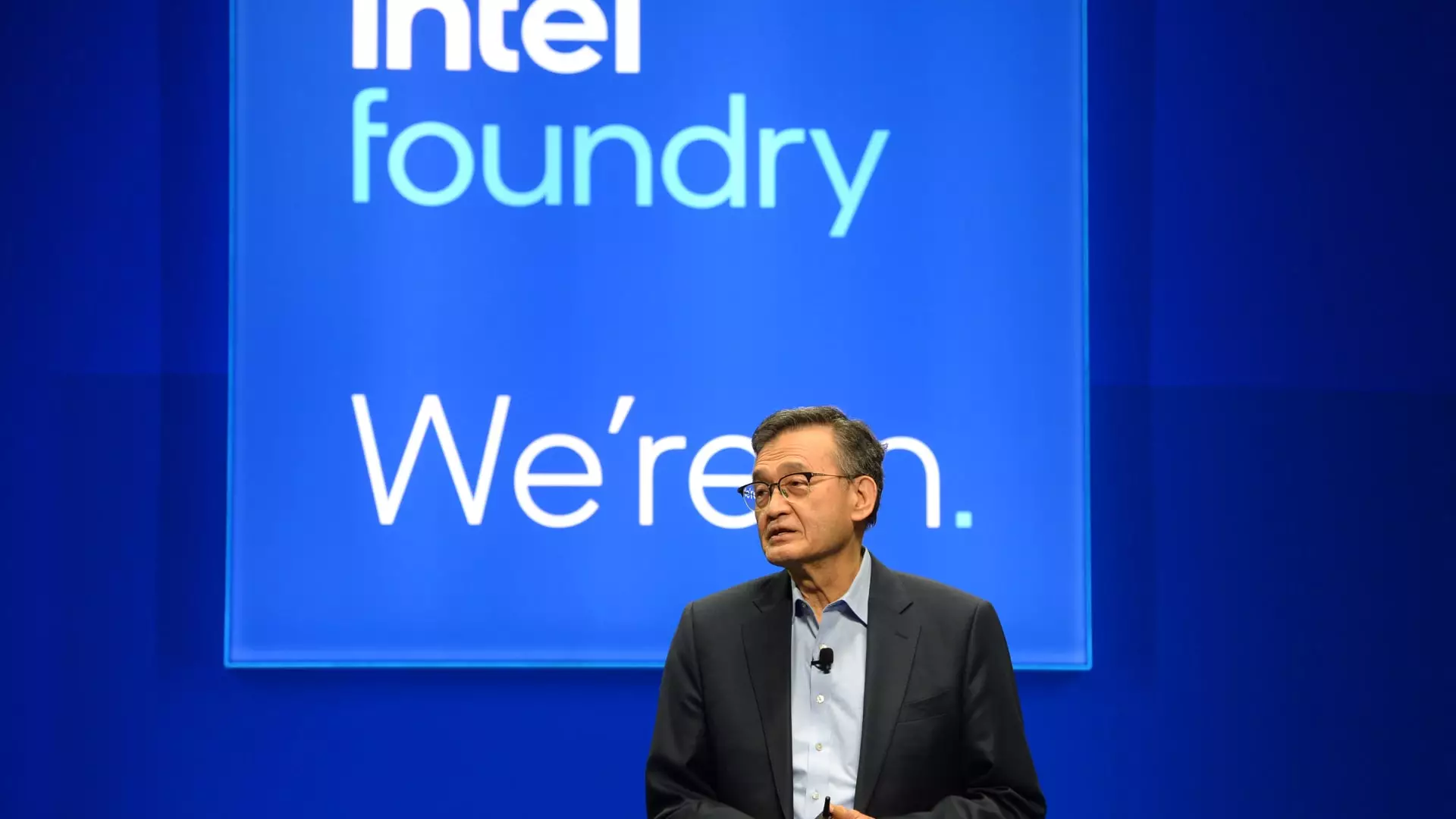
In the high-stakes arena of semiconductor manufacturing, Intel finds itself at a critical crossroads. Despite posting better-than-expected earnings, the company’s announcement of significant cost-cutting measures and a potential retreat from its foundry ambitions signals a turbulent period of recalibration. In an industry where innovation moves at breakneck speed, and market share is fiercely contested, Intel’s strategic adjustments reveal both desperation and hope. The company’s willingness to slash costs and scale back expansion projects demonstrates a recognition that survival may require the kind of radical restructuring that has defined many successful turnaround stories. Yet, beneath this aggressive posture lies an internal struggle: can Intel reinvent itself without jeopardizing its core competencies or losing relevance in key markets such as artificial intelligence?
Market Confidence Erodes as Uncertainty Takes Center Stage
The fallout from Intel’s recent decision was swift, with its stock plummeting by 9% and wiping out the year’s gains. This decline, coupled with a staggering 60% drop in stock value for 2024, underscores investor unease. The market’s skepticism is rooted not only in Intel’s faltering foundry aspirations but also in its inability to keep pace with competitors like Taiwan Semiconductor Manufacturing Company (TSMC) and Samsung, who dominate the external manufacturing space. More painfully, Intel’s sluggish AI performance with Nvidia capturing the lion’s share of the lucrative market further diminishes investor confidence.
While Intel’s recent earnings—beating revenue estimates and projecting stable Q3 sales—offer glimmers of hope, the internal message from leadership hints at deeper issues. The company is now explicitly signaling that its foundry business may be abandoned if external customers do not materialize, reflecting a potentially catastrophic shift in strategy. This admission raises questions: has Intel overextended itself in trying to diversify, or is this a necessary step toward long-term viability? The answer hinges on whether the company can pivot quickly enough to inspire confidence among clients and shareholders alike.
Short-Term Pain for Long-Term Gain?
The internal restructuring efforts, including layoffs that will reduce the workforce by 15% and the scaling back of manufacturing projects in Europe and Ohio, suggest a ruthless focus on efficiency. CEO Lip-Bu Tan’s candid acknowledgment that prior investments were premature points to an industry veteran grappling with a complex web of challenges—market oversupply, decreased demand, and continuous competitive pressure.
Moreover, the widening net loss—afflicted by an $800 million impairment charge—highlights the painful realities behind these strategic recalibrations. Yet, this moment of pain could set the stage for a stronger, more focused future. Intel’s decision to potentially cease its foundry operations or reallocate resources away from uncertain markets indicates a willingness to accept short-term setbacks in pursuit of sustainable growth. This pragmatic mindset aligns with a broader industry trend where agility and strategic focus are often more valuable than sprawling, underperforming assets.
The Road Ahead: Innovation Through Pragmatism or Risk?
While critics may argue that Intel’s retreat from the foundry business could cede ground to competitors, proponents might see it as a necessary adjustment in a turbulent landscape. The challenge remains: can Intel harness its remaining assets—its manufacturing expertise, loyal customer base, and innovation potential—to carve out a better future? The company’s emphasis on building the 14A process node based on confirmed client commitments suggests a cautious approach, prioritizing certainty over ambition—an approach that might be both prudent and limiting.
In the end, Intel’s strategic decisions reflect a company that refuses to remain static. Its willingness to cut costs, streamline operations, and reconsider its core business lines demonstrates resilience—albeit tempered by the reality that growth in the chip industry remains fiercely competitive and unpredictable. Whether this pivot will enable Intel to regain momentum or catalyze its decline depends largely on its ability to navigate the delicate balance between innovation, cost management, and market confidence. For now, Intel’s story is one of a giant trying to find its footing amid the shifting sands of a hyper-competitive industry landscape.
 English
  Spanish