
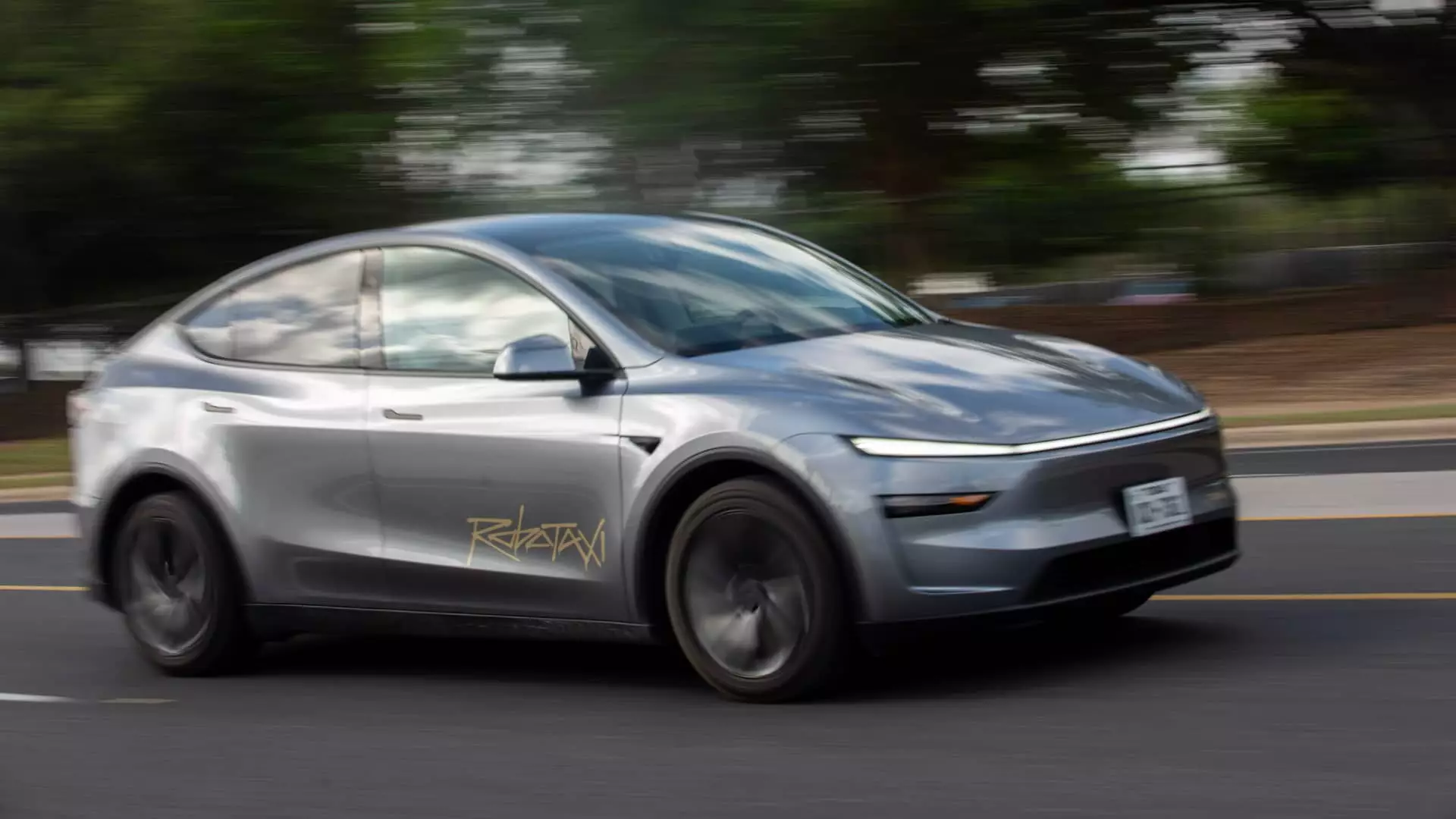
Tesla’s recent teasing of expanding its robotaxi service into the bustling San Francisco Bay Area captures imaginations and stirs excitement about the future of autonomous vehicles. Elon Musk’s ambitious plans hint at a transformational shift in urban mobility, promising a taxi service that operates seamlessly without human drivers. Yet, beneath this futuristic allure lies a complex web of regulatory constraints, legal deadlines, and safety concerns that threaten to inhibit Tesla’s progress. It’s a stark reminder that brilliance in innovation alone cannot circumvent the intricacies of governmental oversight, especially in a state like California, where regulation is rigorous and safety is paramount.
This dichotomy—the allure of disruptive technology versus the sober realities of legal compliance—creates a challenging environment for Tesla. The company’s narrative positioning it as a pioneer faces resistance from authorities who emphasize cautious progress, emphasizing that autonomous vehicles must be tested and operated within strict boundaries. While Tesla’s vision of a fully autonomous ride-hailing network is compelling, the current regulatory framework insists that, at least for now, the company sticks to transportation models that involve human drivers, such as traditional taxi or limousine services. To truly innovate within this landscape, Tesla must navigate a delicate balancing act: pushing the boundaries of technology while respecting the regulatory landscape that prioritizes public safety.
Regulation as a Barrier to Innovation or Necessary Safeguard?
California’s stance on autonomous vehicles underscores a broader debate about the pace of innovation versus the need for regulation. The California Public Utilities Commission (CPUC) makes it explicitly clear: Tesla cannot offer autonomous rides to the public without a licensed human driver present. Despite Tesla’s aggressive expansion plans and marketing claims about full self-driving capabilities, regulators refuse to budge. They stipulate that Tesla’s current operation in the state is limited to non-autonomous, driver-involved services under existing permits—effectively a traditional taxi with a human chauffeur rather than the robotaxi of the sci-fi visions Musk eagerly promotes.
This regulatory stance is not merely bureaucratic stifling but rooted in concerns over safety, accountability, and public trust. Regulatory agencies have the difficult task of balancing technological innovation with protecting citizens from unforeseen risks. Tesla’s history of overpromising about its autonomous capabilities has only heightened skepticism. The company’s recent rebranding of driver assistance features as “FSD Supervised” without a clear enforceable standard for driver management has fueled concerns about consumer misunderstanding and false safety assurances. In this context, regulators are cautious, insisting Tesla’s vehicles must have a licensed driver ready to intervene at all times, thus preventing the full realization of a driverless fleet.
Moreover, permits like the “charter-party carrier” license allow Tesla to operate a traditional paid car service with human drivers, but not autonomous vehicles. This delineation highlights how regulatory authorities perceive the current stage of Tesla’s technology—still experimental, still requiring human oversight. It’s a sobering reality check for any tech company aiming to leap ahead. Tesla’s ambition to bypass the foundational steps of regulation and leap directly into driverless taxi services ignores the importance of incremental, safety-focused deployment.
The Disconnect Between Tesla’s Bold Claims and Community Expectations
Tesla’s internal communications hint at rapid expansion plans, with reports suggesting that Tesla intends to roll out robotaxis in the Bay Area by the weekend. Yet, community officials and regulators remain largely in the dark. County supervisors and local officials express reservations—not because they oppose innovation per se, but because of the lack of transparency. This disconnect between Tesla’s aggressive rollout announcements and the community’s expectations reflects a broader pattern of tech companies prioritizing growth over stakeholder engagement.
The absence of open dialogue fosters mistrust and raises questions about accountability. Residents and policymakers alike are left wondering: will Tesla’s self-proclaimed advancements truly prioritize safety, or will they rush into commercialization disregarding the complex factors involved? This misalignment points to a critical oversight often seen with disruptive new industries: the importance of managing public perception and community relations. Without clear communication and compliance, Tesla risks alienating the very communities its ambitious visions aim to serve.
Meanwhile, competitors like Waymo exemplify a more cautious yet steady approach. Their progression through regulatory channels, obtaining permits before deploying driverless services, underscores a more sustainable and community-conscious strategy. This raises an essential question: should Tesla adapt its aggressive expansion model, or learn from the measured tactics of peers committed to regulatory compliance?
The Broader Implications for Innovation and Regulation
Tesla’s push into autonomous ride-hailing reflects a fundamental tension that defines much of today’s technological advancement. On one side, the pursuit of groundbreaking innovation promises to revolutionize urban transport, improve accessibility, and reduce congestion. On the other, unregulated or prematurely deployed autonomous systems could pose safety risks, legal liabilities, and public-relations challenges.
Tesla is caught in this crossfire: eager to establish dominance and shape the future of mobility, yet constrained by the regulatory frameworks that safeguard society. Musk’s vision of a robotaxi fleet running seamlessly across American cities remains aspirational for now. This situation should serve as a wake-up call that technological ingenuity must be paired with thoughtful, incremental legislative adaptation.
The key moving forward is a collaborative approach—where companies like Tesla work transparently with regulators, share data openly to build trust, and prioritize safety above rapid deployment. Only then can the lofty promises of autonomous taxis become a normalized part of urban life, fulfilling their potential without compromising public safety or undermining regulatory authority. Until such harmony is achieved, Tesla’s robotaxi aspirations will remain a tantalizing but constrained glimpse into the future of mobility.
 English
  Spanish