
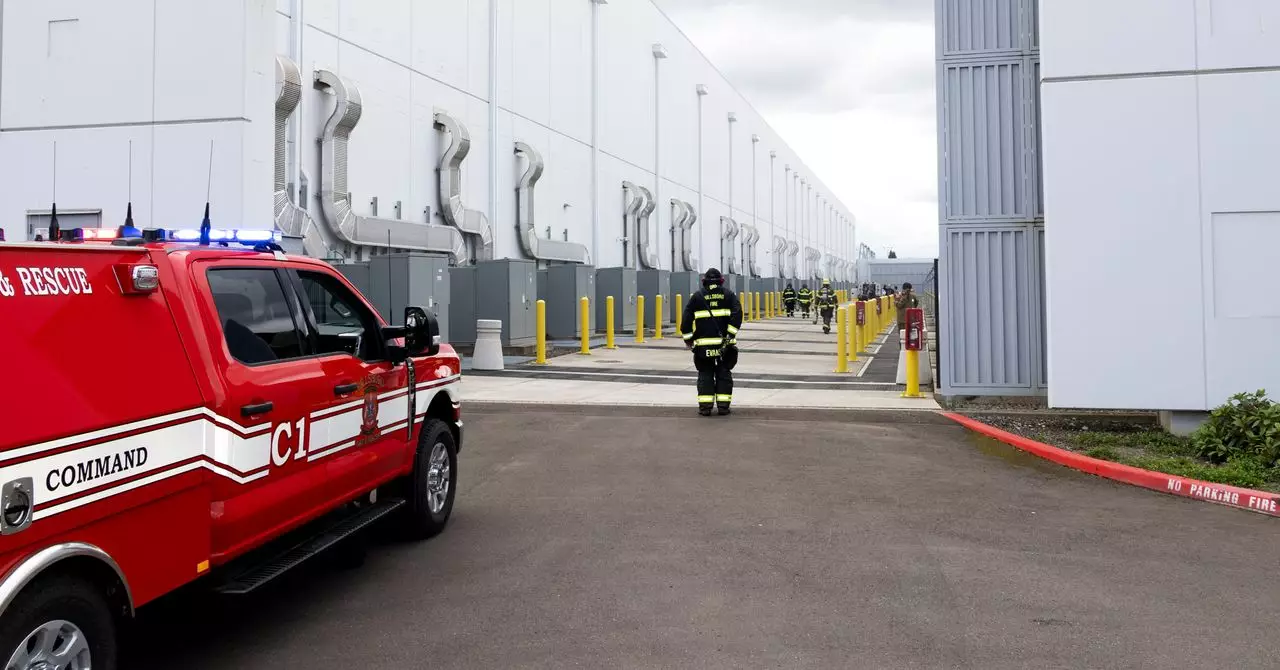
As our reliance on digital technology deepens, the vulnerability of data centers—a crucial backbone of the internet—becomes ever more apparent. These facilities, often hidden from public view, are tasked with maintaining the flow of global information. Yet, recent incidents like the devastating fire at the Hillsboro data center serve as stark reminders that beneath their sleek, high-tech veneer lies an inherent fragility. Particularly concerning is how the enormous power demands driven by AI and digital expansion may be amplifying risks, exposing weaknesses in safety protocols and infrastructure that have gone largely unexamined.
This event isn’t isolated; fires at data centers remain rare but consequential. They often result from electrical failures, overheating, or mechanical faults, and their rarity shouldn’t breed complacency. As data centers grow larger and more complex—especially those supporting advanced AI models—they face new hazards that traditional safety measures might not sufficiently address. The Hillsboro blaze exemplifies this challenge: a fire caused by an electrical component, and potentially linked to the immense electrical loads that modern data centers must handle. It raises troubling questions about our preparedness to mitigate such hazards at a time when digital infrastructure is critical to economic stability and societal functioning.
Overreliance on Complex Systems and the Promise of Oversight
One striking aspect of the Hillsboro incident is the role of uninterruptible power supplies (UPS). These units are vital for maintaining uninterrupted power flow; they are designed as a safety buffer during outages or failures. However, their complexity and the high energy density of their components—like large batteries—make them potential fire hazards themselves. The fire investigation pointed to a potential electrical or mechanical failure within the UPS, not a battery malfunction, though the risk remains significant.
This situation underscores a troubling paradox: the very components that safeguard data and maintain uptime can, in failure, threaten the entire facility. Experts warn that high loads and insufficient cooling or temperature management can escalate faults into full-blown fires. Currently, safety protocols and design standards may not be evolving fast enough to keep pace with increasing power densities and technological complexity. While companies claim to have taken steps to improve safety, details remain opaque, and the industry’s oversight appears insufficient given the stakes.
The fire’s unidentified ignition source highlights a systemic issue—the opacity of safety failures in mission-critical systems. Without transparency or rigorous oversight, vulnerabilities can linger unseen until catastrophe strikes. The incident should serve as a wake-up call for the industry to prioritize proactive safety assessments and stricter regulation, especially as AI workloads push equipment to its limits.
The Broader Implications for a Digital Society
What lies beneath the surface of this local fire incident is a broader societal risk. As AI and data-intensive applications burgeon, the physical infrastructure supporting these technologies must scale responsibly, emphasizing safety and resilience. Yet, a culture of cost-cutting, rapid deployment, and technological optimism often neglects the building blocks of safety.
Tempering this unease is the recognition that data centers are not just technology hubs—they are also emergency zones with the potential for widespread disruption. The recent Hillsboro fire resulted in significant damage, estimated at $260,000, destroying one power cabinet and damaging two neighboring units. While no injuries were reported, the incident exemplifies how a single failure can cascade into operational downtime, environmental hazards, and financial loss.
Addressing these vulnerabilities requires a paradigm shift. Companies must embrace rigorous engineering standards, prioritize cooling and electrical safety, and foster transparency about safety lapses. Regulatory bodies should enforce stricter inspections and mandate advanced fire prevention measures tailored to the unique hazards of modern power systems. Reliance solely on industry assurances and incremental improvements is insufficient; proactive, systemic reforms are necessary to fortify our digital backbone against future crises.
In the end, the Hillsboro fire serves as both a cautionary tale and a rallying cry. Our interconnected society depends on data centers that are resilient, safe, and evolving with emerging technology demands. Without substantive change, we risk facing more blazes—each one exposing vulnerabilities that could threaten the stability of our increasingly digital world.
 English
  Spanish